License and Disclaimer2
License
- Intercultural Peace Building © 2024 by HLA Lohne is licensed under Creative Commons Attribution-NonCommercial-ShareAlike 4.0 International. To view a copy of this license, visit https://creativecommons.org/licenses/by-nc-sa/4.0/
-

-

Disclaimer
The Peace Building Project3
Peace Building HLA - a school's mission
-
-
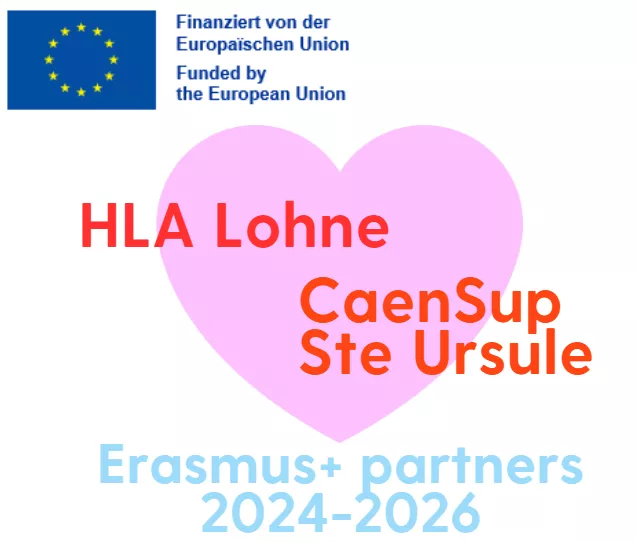
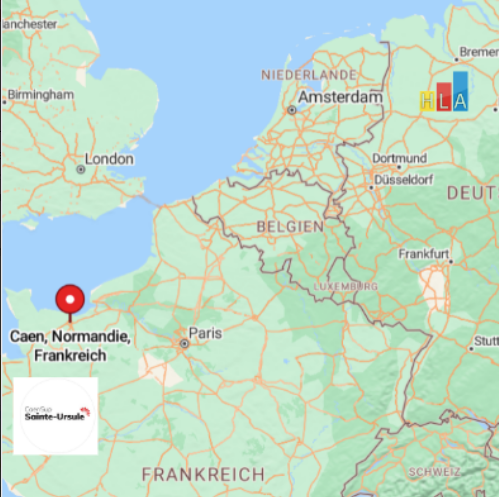
Peace Building HLA is even more than an Erasmus+ project. It embarks the students' needs of an entire school for peace building processes. Seeking for information in times of multiple political crises leads to insecurity but also to the profound wish for participation and self-efficacy. This is what the head project tries to find answers to. If you like to find out more about our activities, check our instagram account:
-
www.instagram.com LINK
-


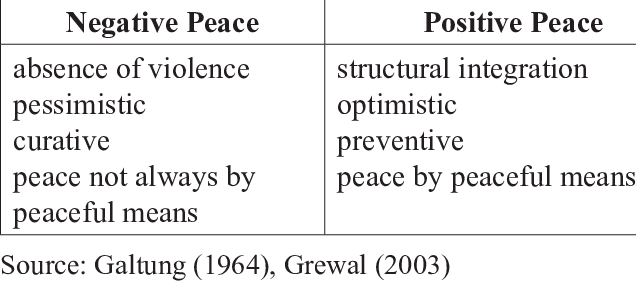
J. Galtung "Positiver Frieden"
-
Our project is based on Johan Galtung's concept of positive peace which goes far beyond the mere absence of war and physical violence. It emphasizes the necessity for profound social, economic, and cultural changes to create a just, inclusive, and sustainable society. Positive peace requires the elimination of structural violence, the promotion of justice and cultural diversity, sustainable development practices, non-violent conflict resolution mechanisms, the empowerment and participation of all members of society, and education that fosters awareness and values for harmonious coexistence. Only through the comprehensive implementation of these principles can a society achieve genuine and lasting peace.
-
"Peace and Climate" in Lohne 04/245
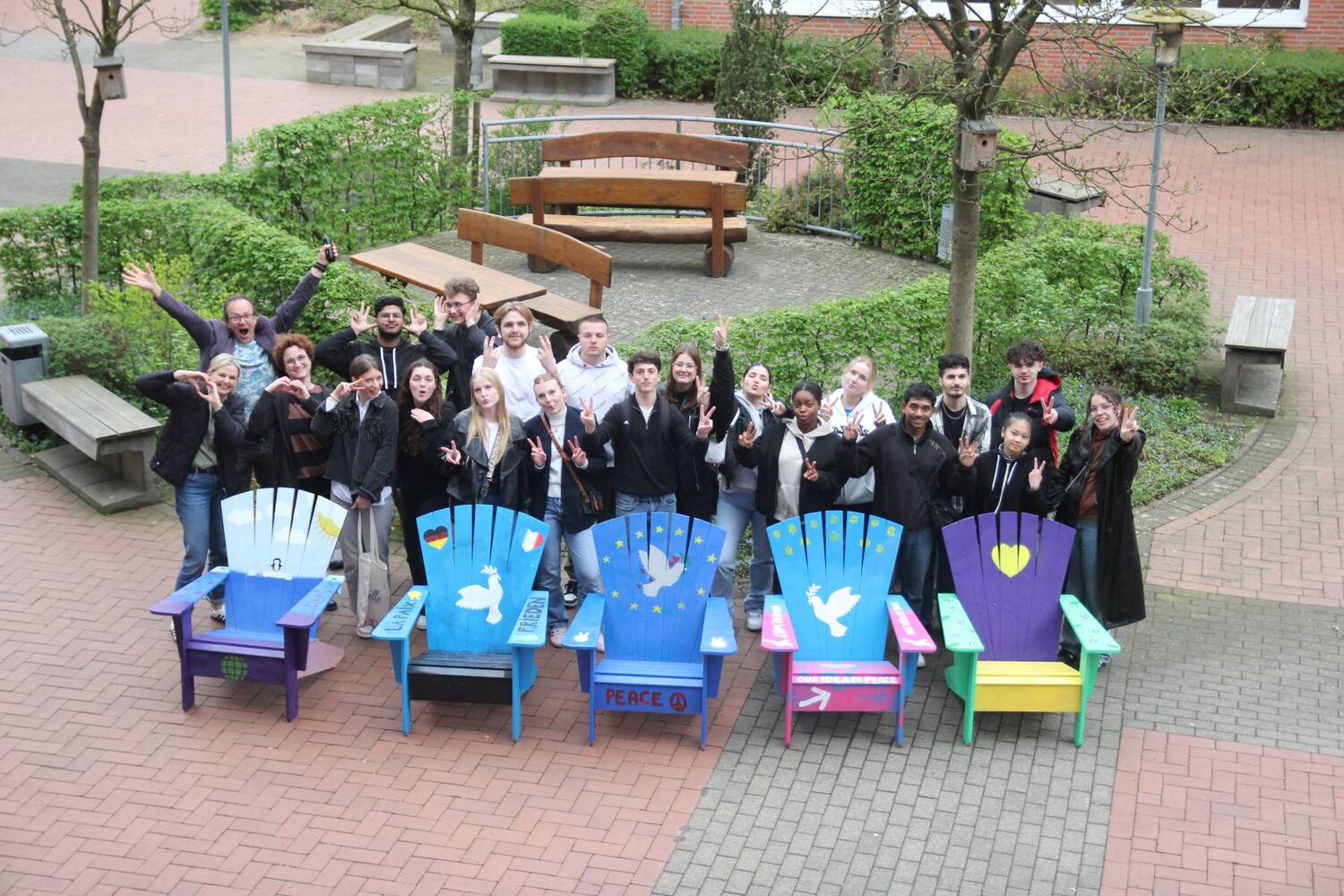
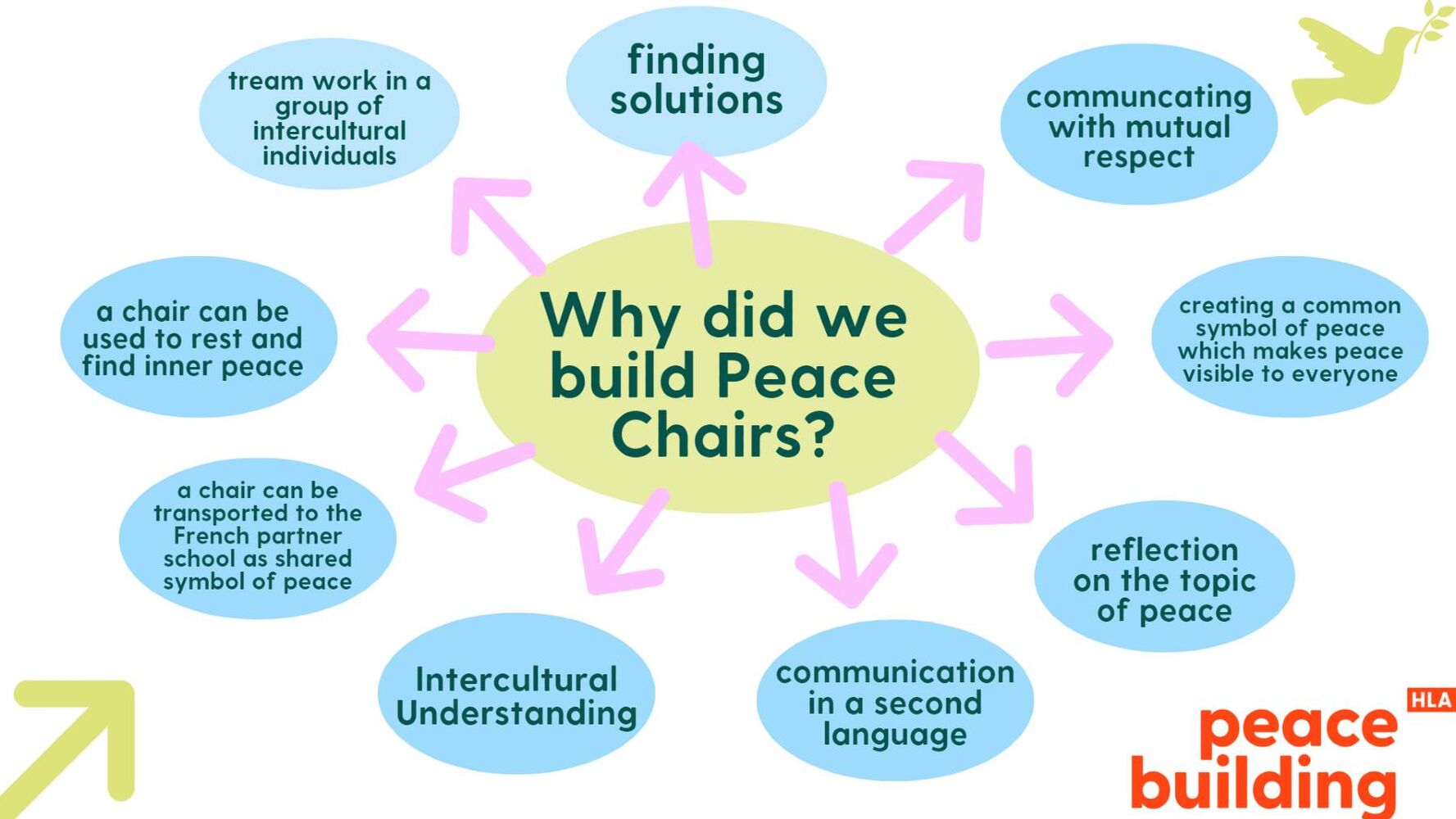
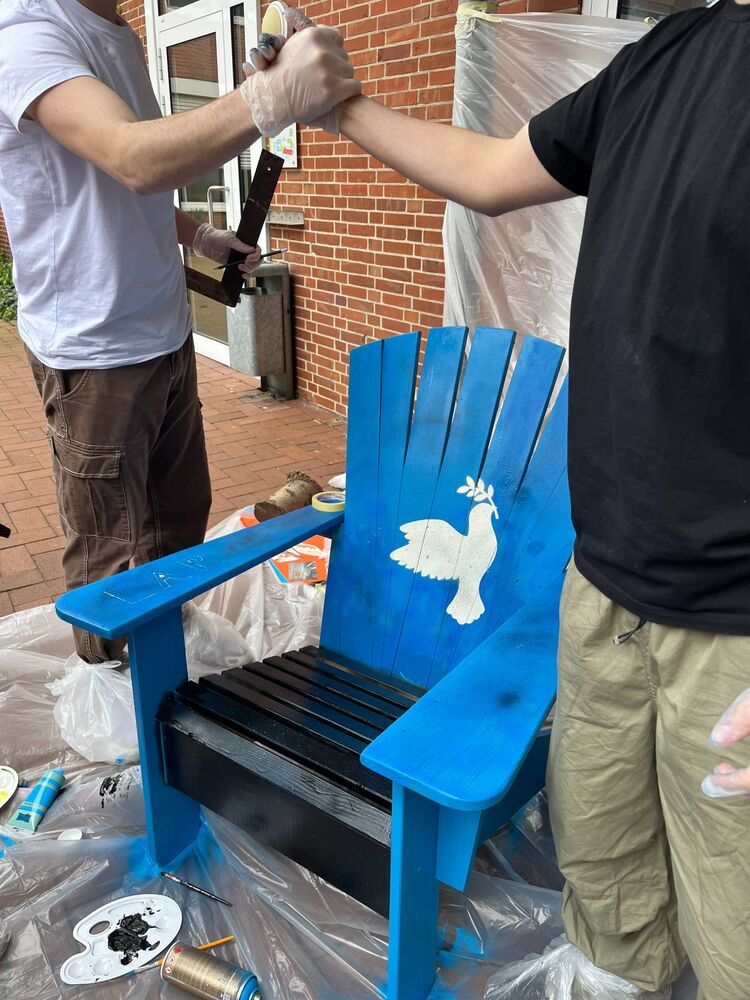
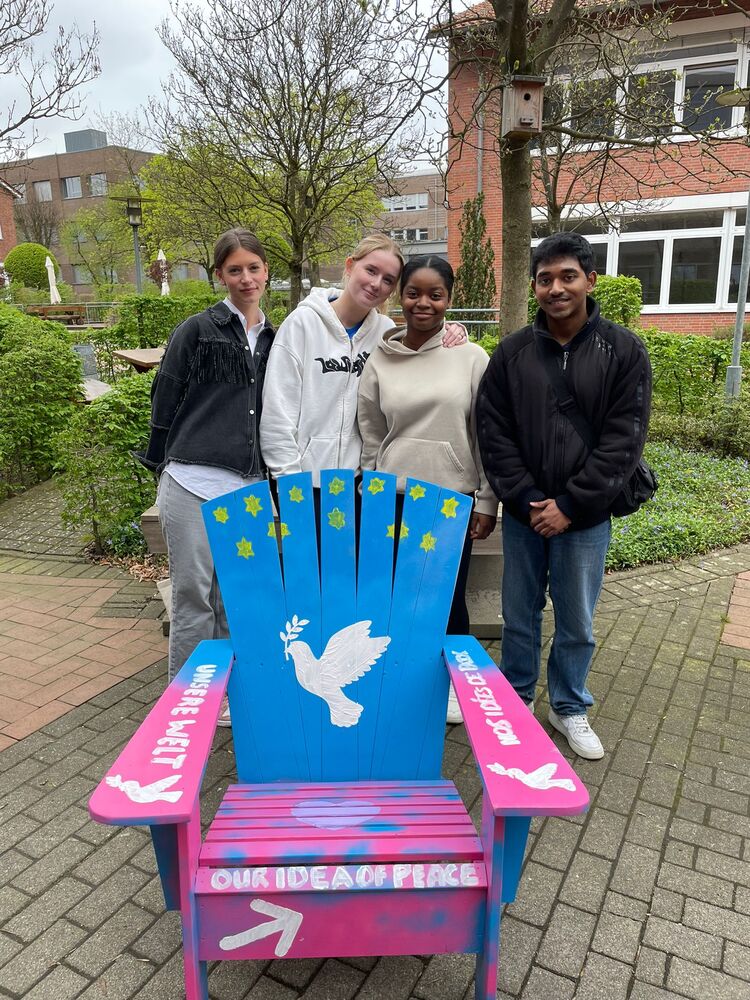
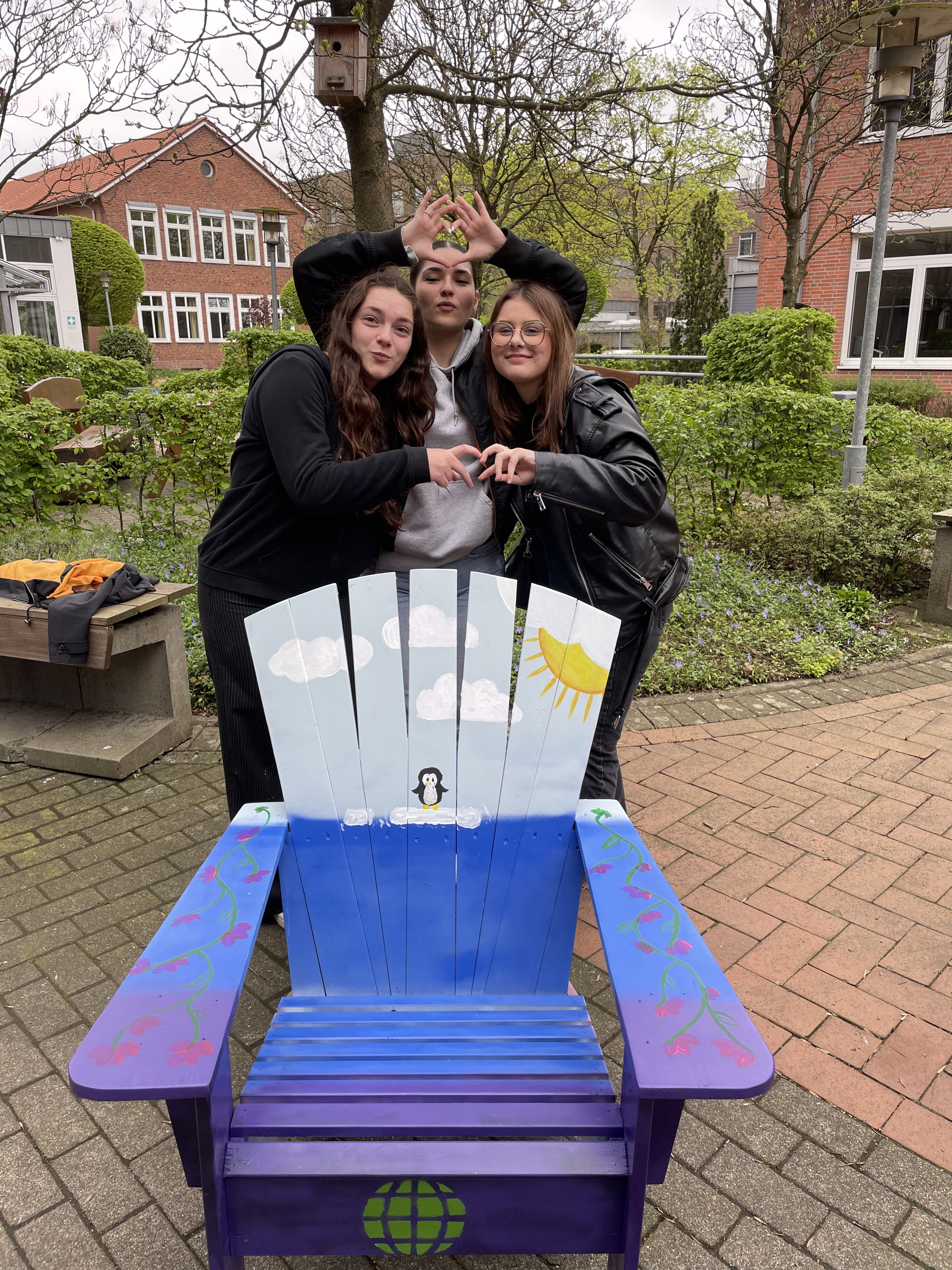
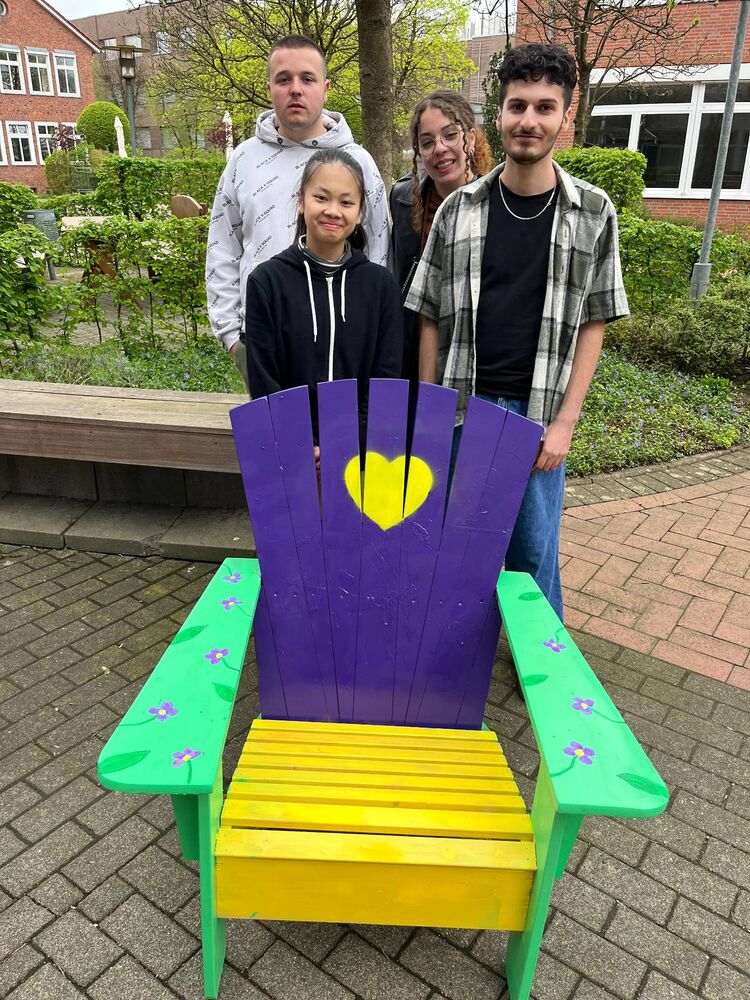
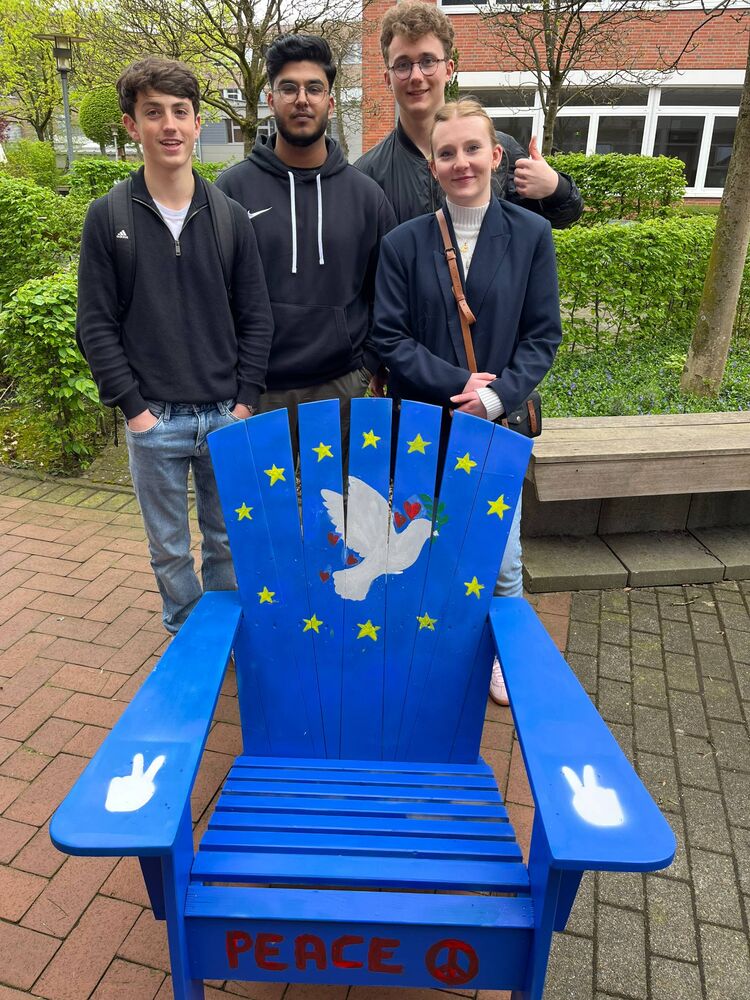
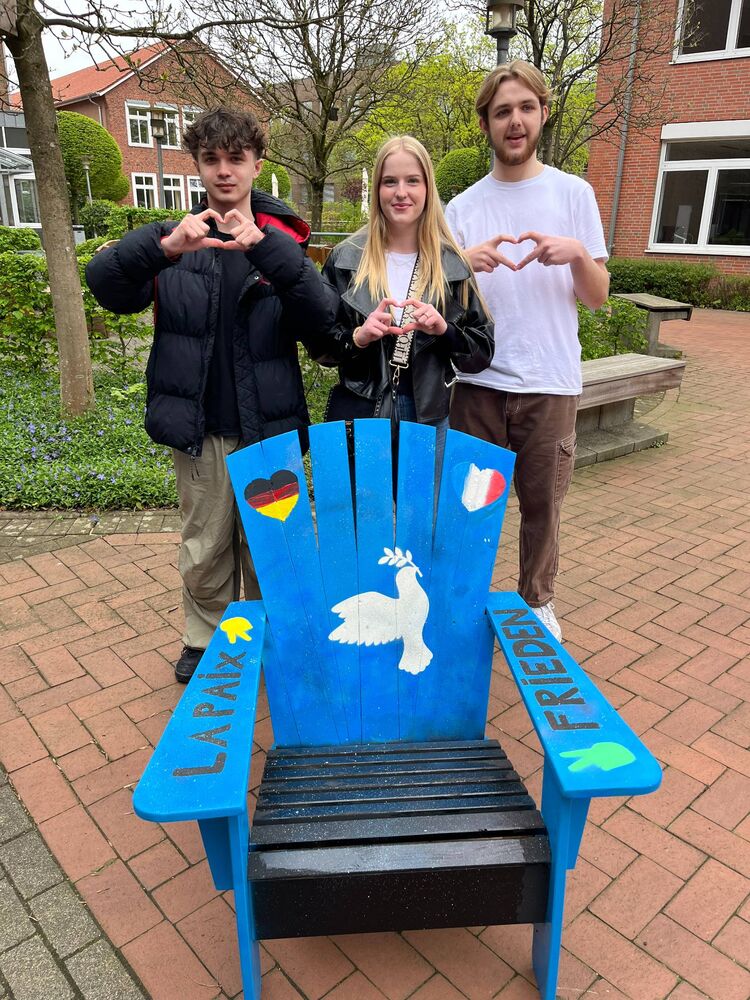
Other Activities "Peace and Climate"
Peace Building Recycling System
-
-
We're excited to introduce our new waste separation system! 🗑️💚 Each of us can make a difference – by recycling correctly, we not only contribute to environmental protection but also promote peace.
-
By effectively separating waste, we reduce resource waste and lower CO₂ emissions. This means cleaner air, healthier soil, and a sustainable future for everyone. Let's take responsibility together! 💪🌱 From now on, you'll find two new waste separation systems in our cafeteria. The round trash cans in the cafeteria are a thing of the past. 🙌
"Peace and Culture" in Caen 06/246
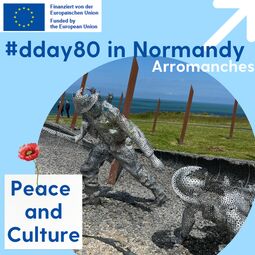
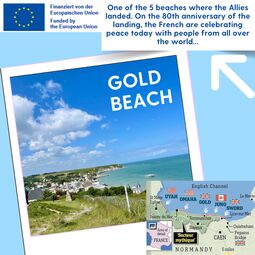
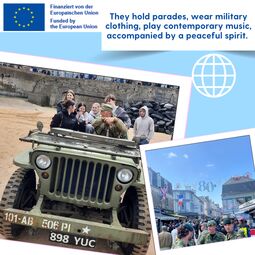
D-Day Festivities in Arromanches
-
-
-
-
-
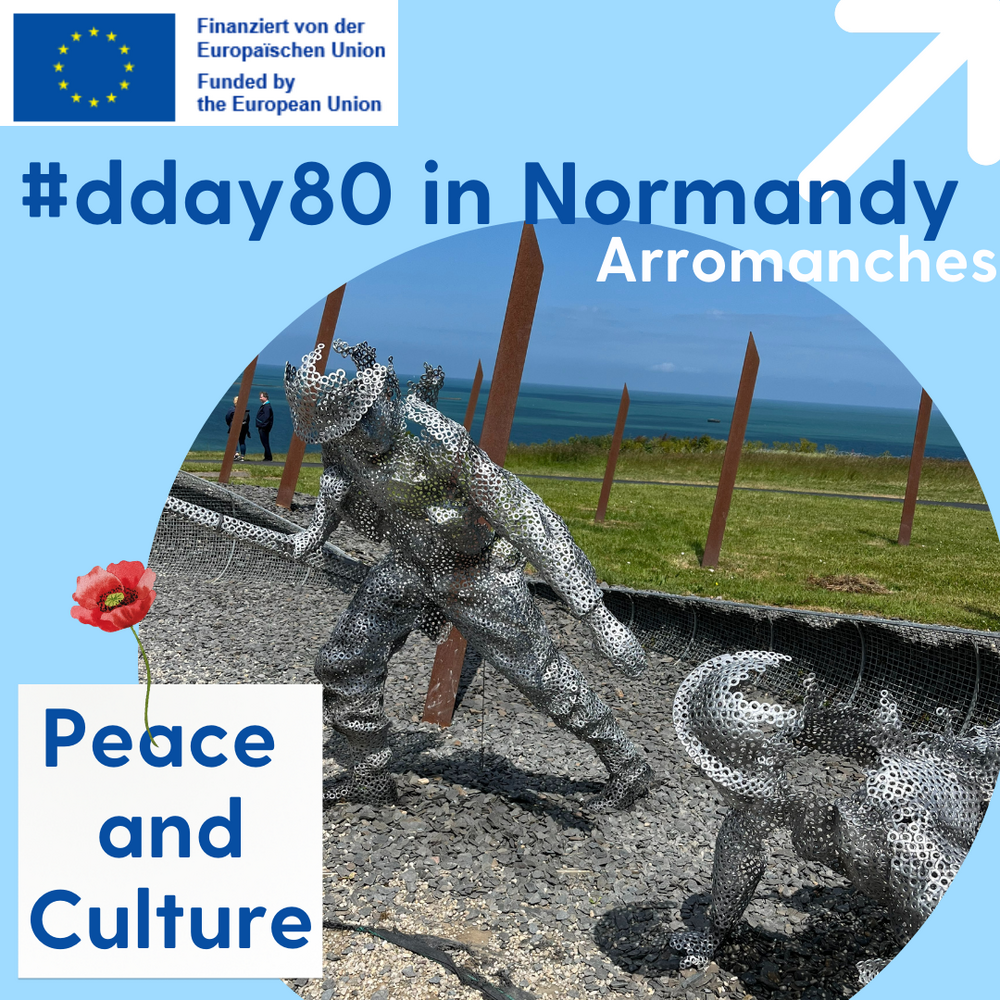
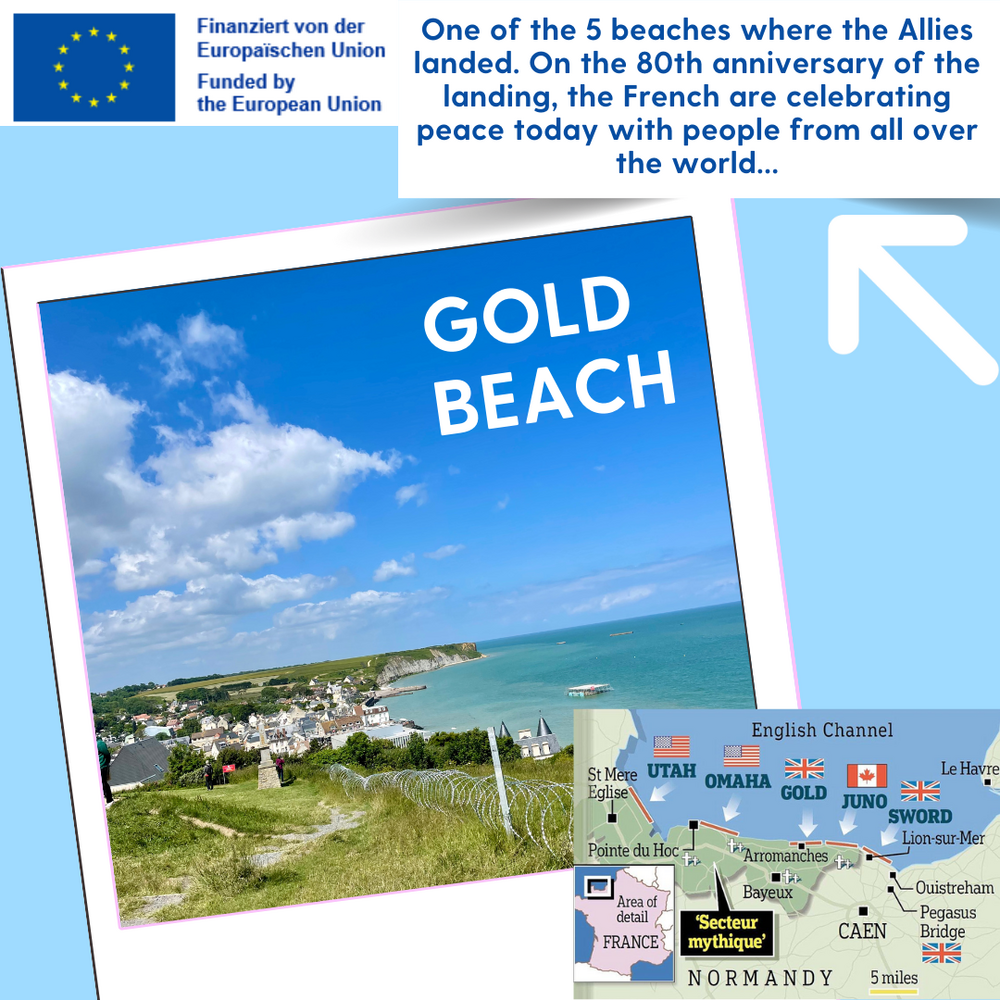
Arromanches, Normandy, at Gold Beach. One of the beaches where the Allies landed to liberate Western Europe from the Nazis.
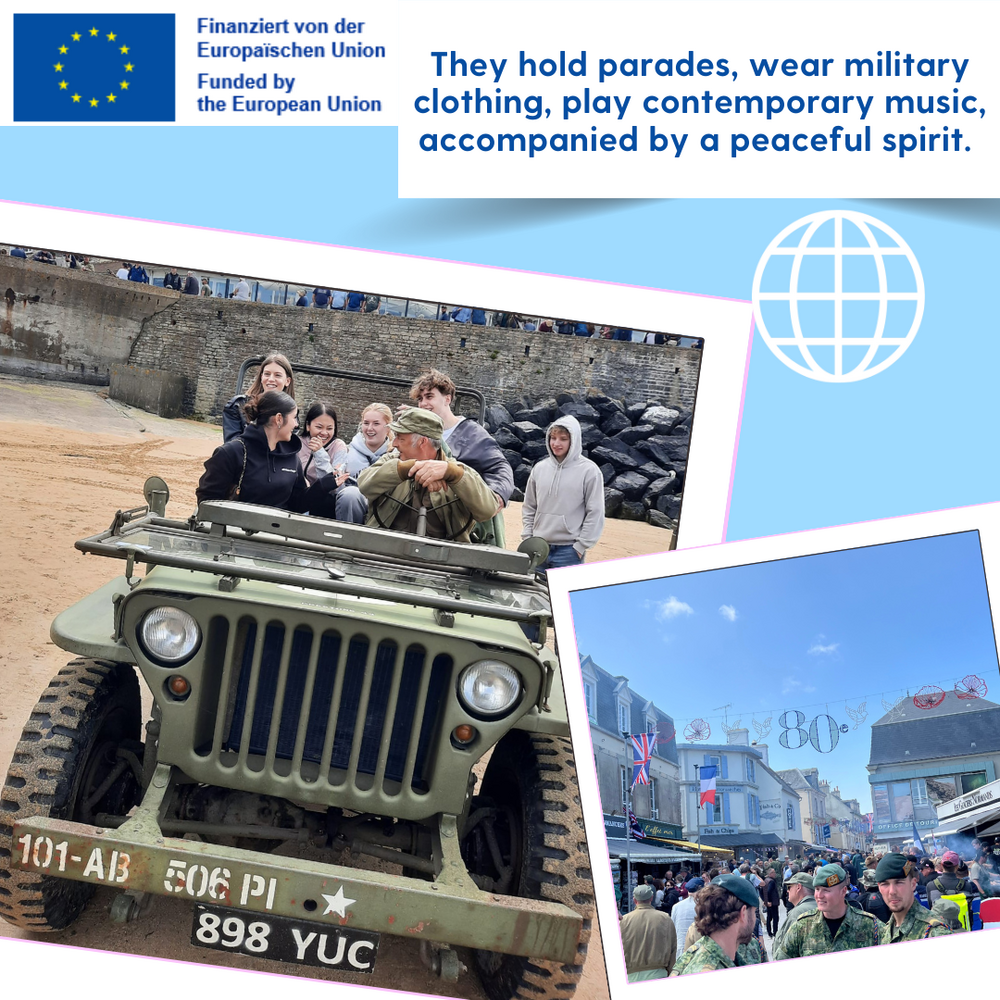
Our first day of the Erasmus week was intense right from the start. We, shaped by our history of guilt and raised to be reserved, were invited to watch military parades, ride in military vehicles, and cheer for warplanes in the sky. What was initially very disconcerting for us is a part of the Norman culture and their way of celebrating peace and showing how important it is. -
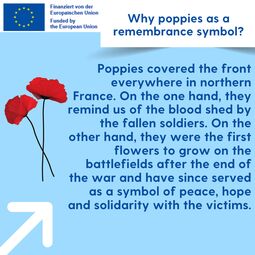
But isn't this exactly the goal of our project? To promote peace? Yes! So, we embraced it and celebrated along. We shed the shadows of our culture and became part of the Norman culture. In the end, we went home with enriching experiences and a poppy on our T-shirts, happy that we had participated in the celebration of peace.
Tree of Peace
-
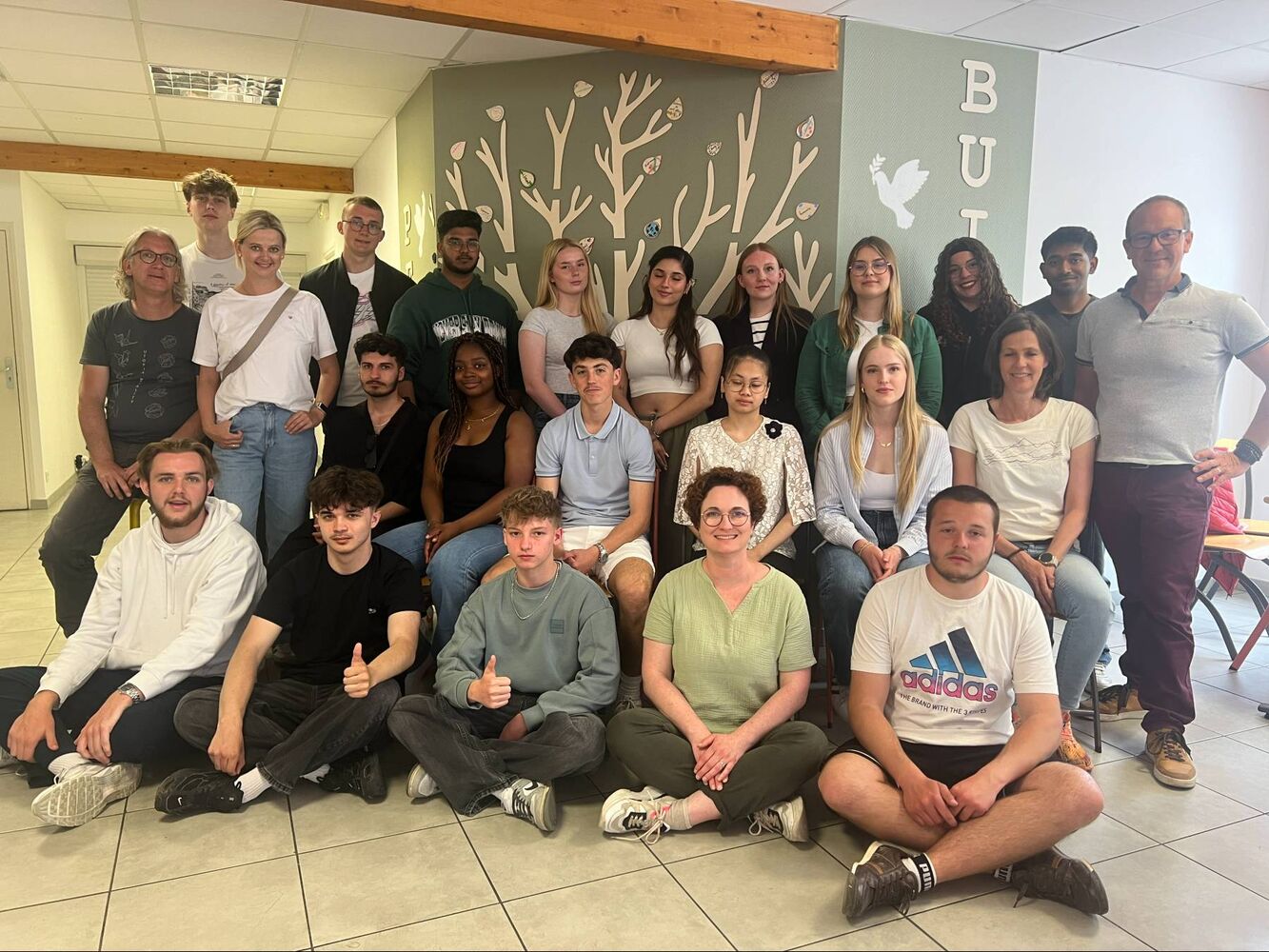
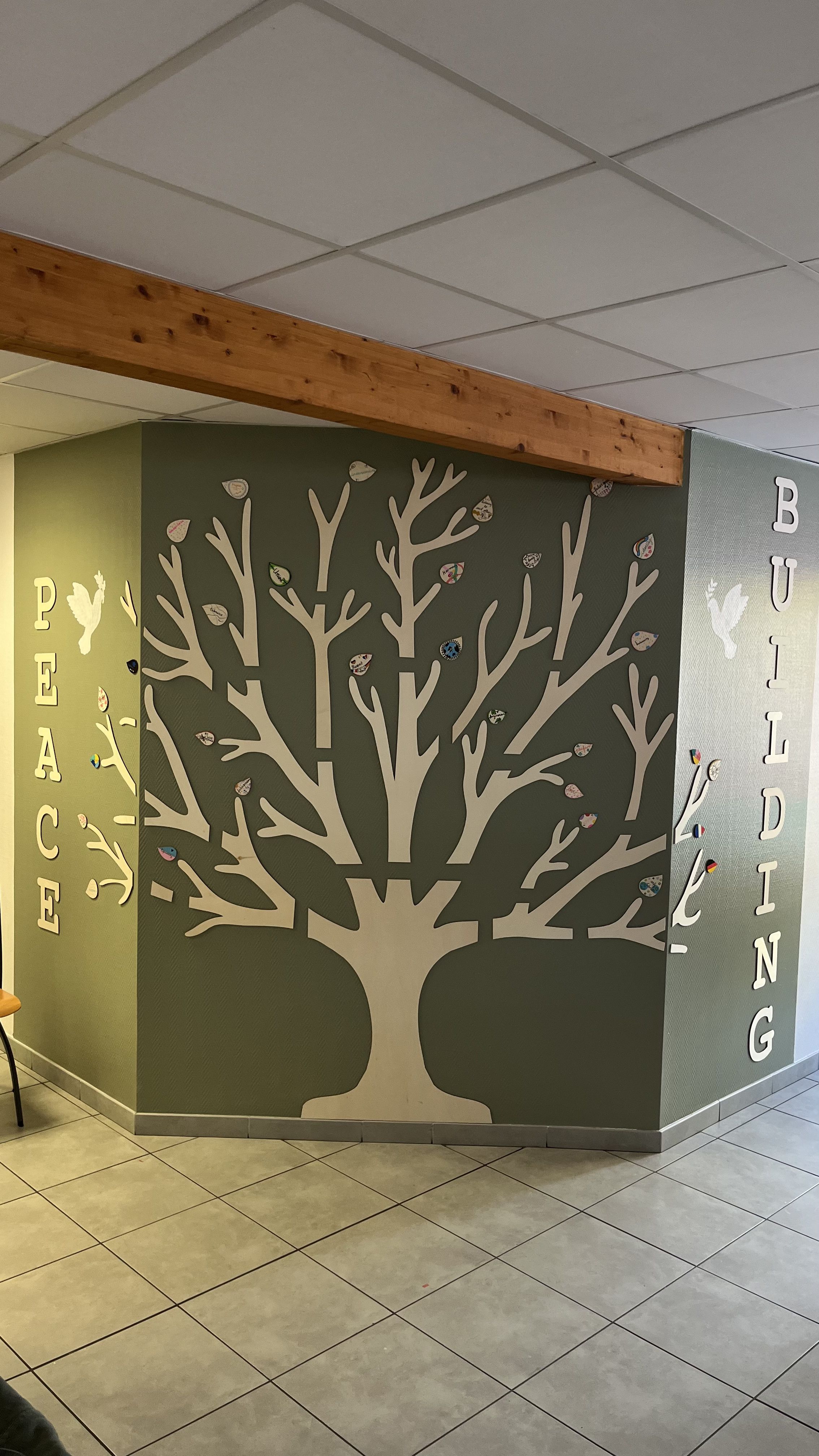
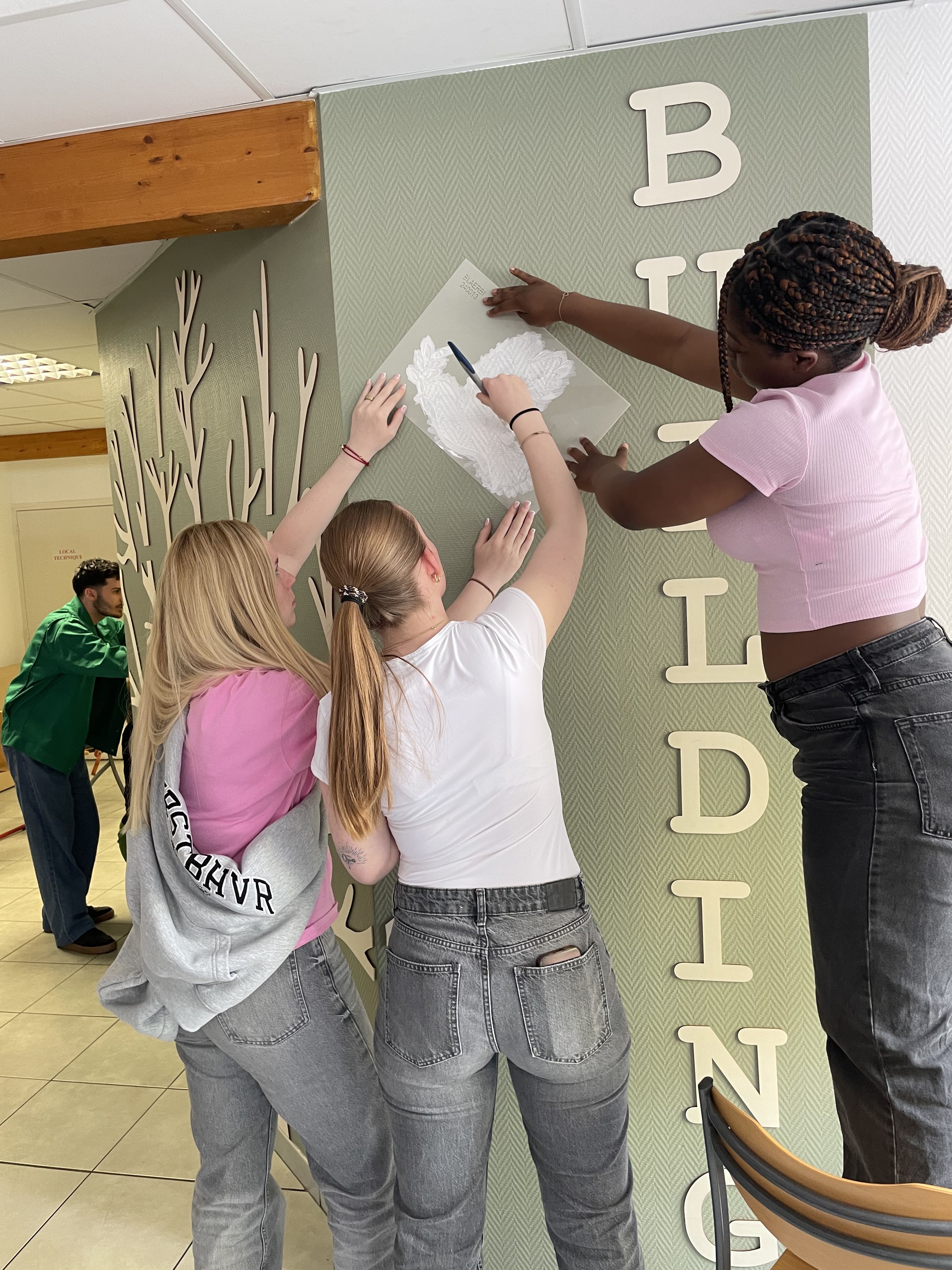
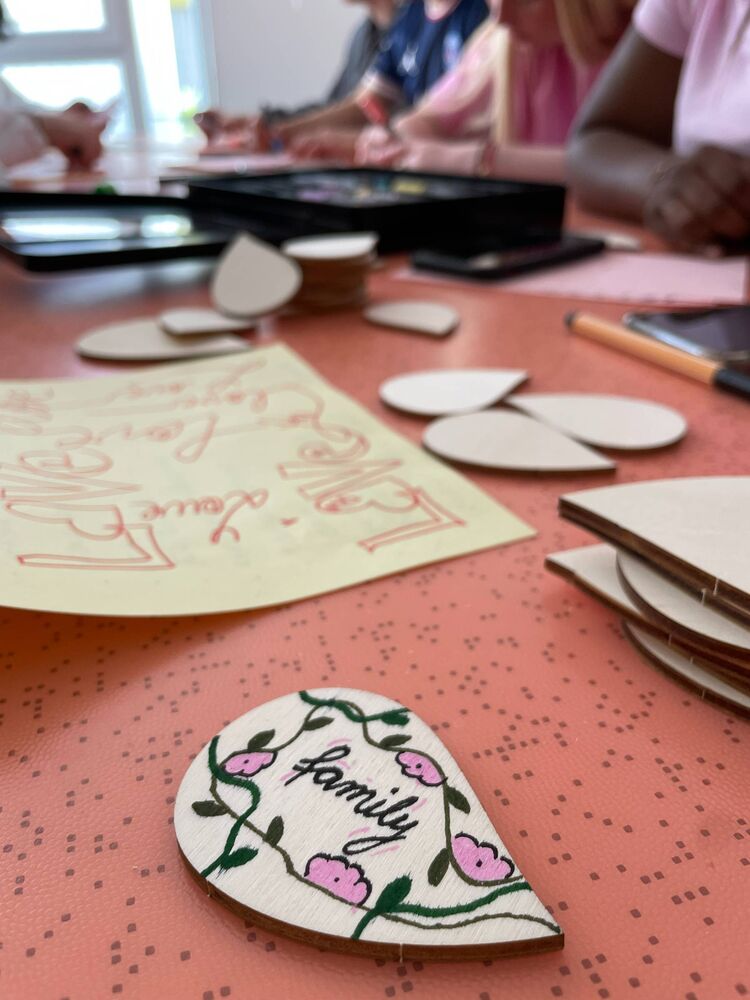
One activity throughout our Erasmus week in Caen was to create a tree of peace for the school building. Here you can see our tree with all the leaves on it leaving a hint for CaenSup's students as well as the school's visitors. They tell our common idea of peace. Students will find words like family, respect, love, acceptance, harmony, tolerance or unity.
D-Day festivities in Ste Contest
-
-
-
-
-
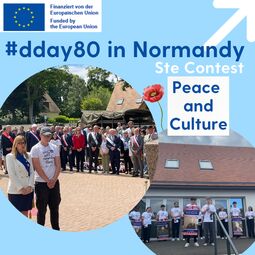
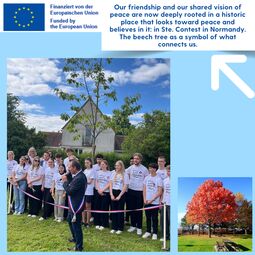
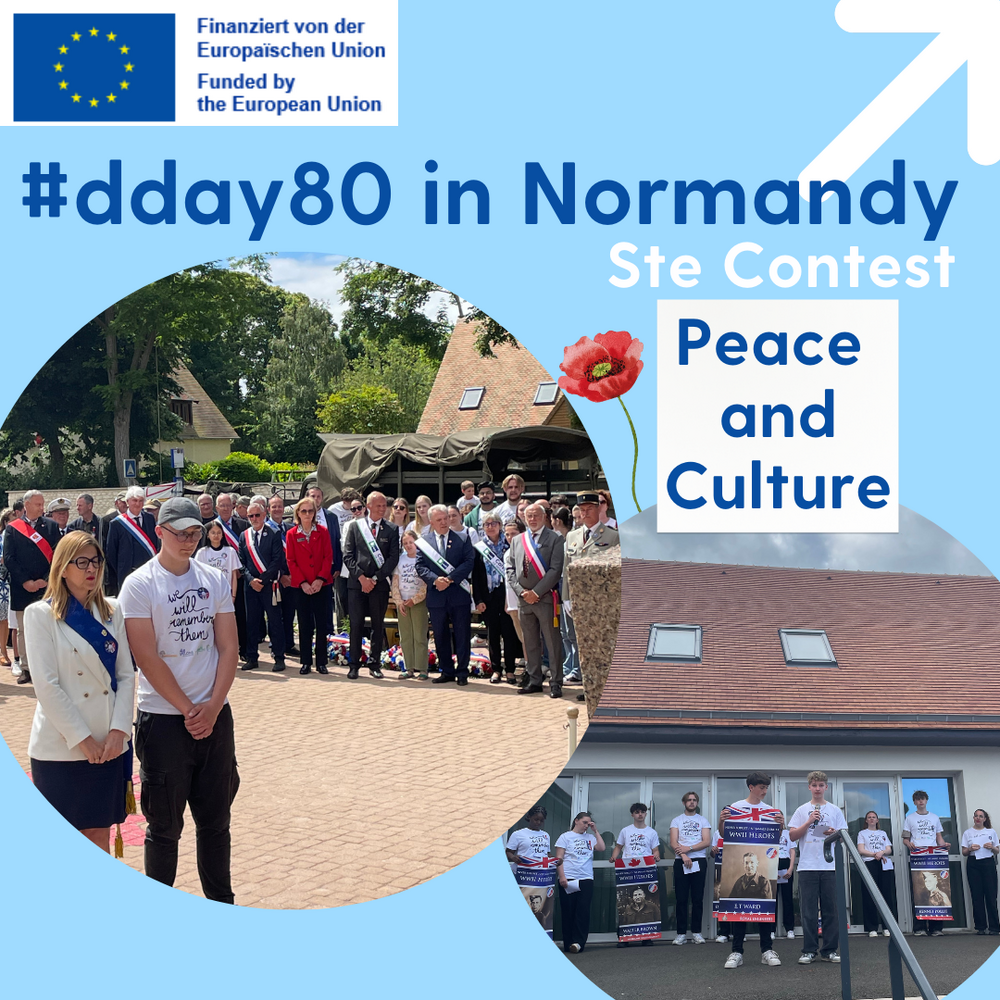
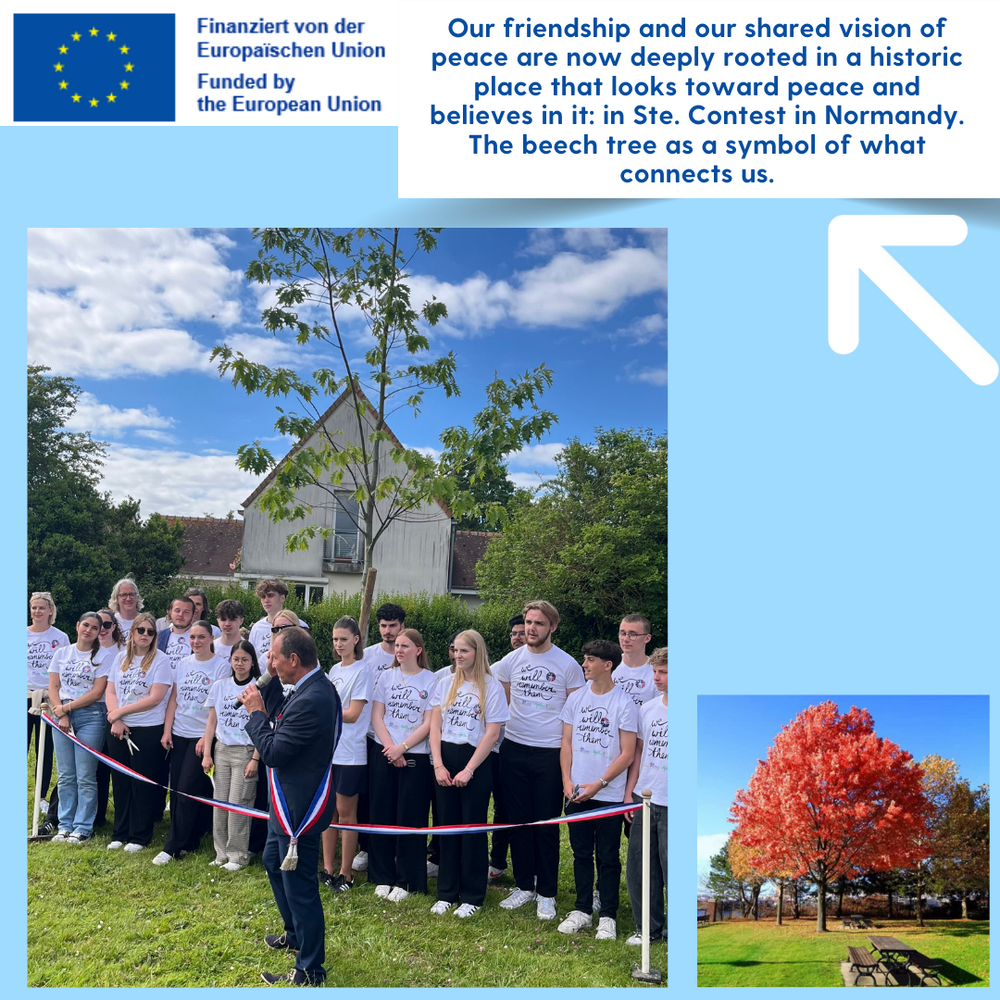
Reflecting on our visit to Ste Contest, Caen, for the 80th D-Day anniversary. We participated in a moving memorial service honoring the fallen veterans of the D-Day landings. Our students laid wreaths alongside politicians like MEP Stephanie Yoncourtin, and heartfelt speeches were delivered. Our role: gratitude, enthusiasm and recognition. The ceremony was musically accompanied by Scottish bagpipers. Another highlight was the ceremonial presentation of the Franco-German Tree of Peace in Ste Contest.
-
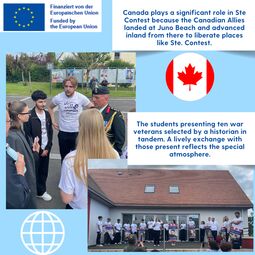
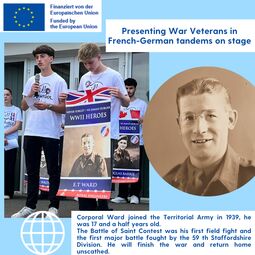
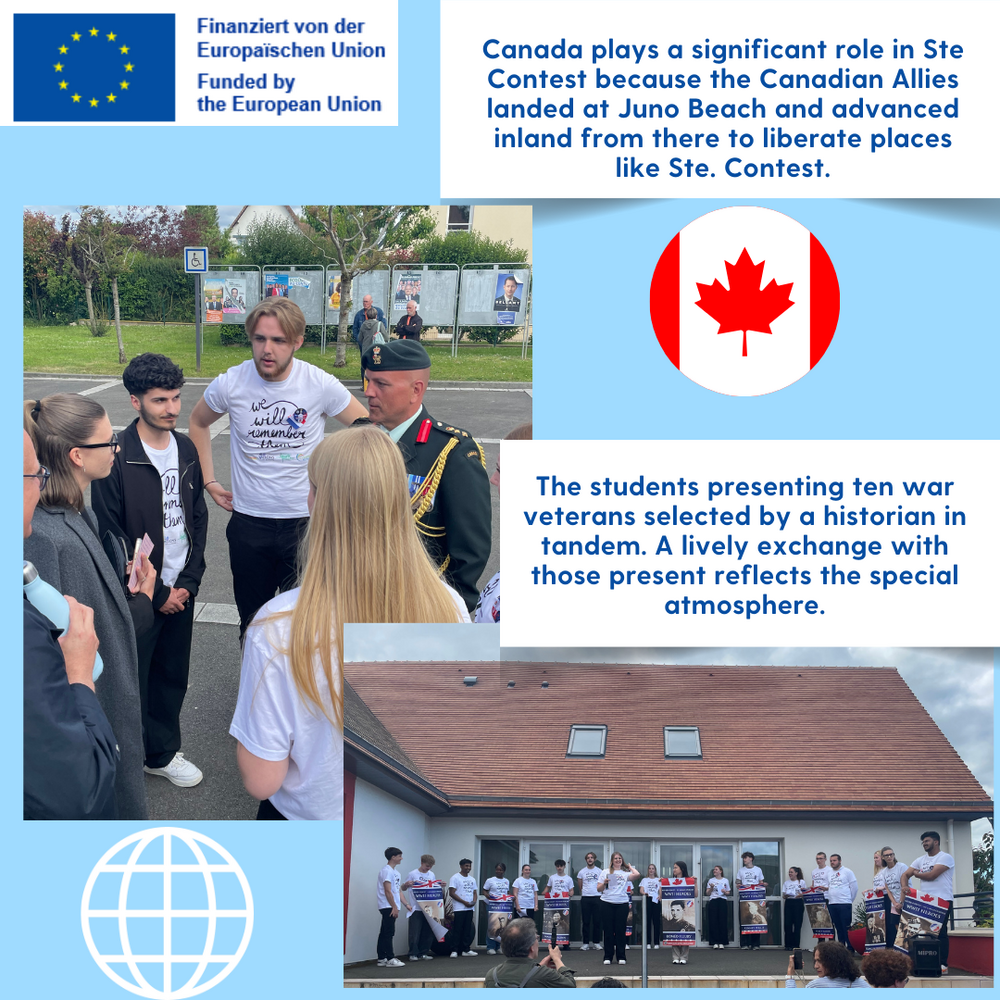
Under the D-Day motto "We will remember them," D-Day was celebrated and the countless victims of WWII were remembered. The poignant stories of 10 veterans were recalled through presentations by French and German students working in tandem. The mayor thanked the students for their dedication to honoring the war veterans. The residents of Ste Contest also warmly welcomed the guests and expressed their gratitude for the students' contributions.
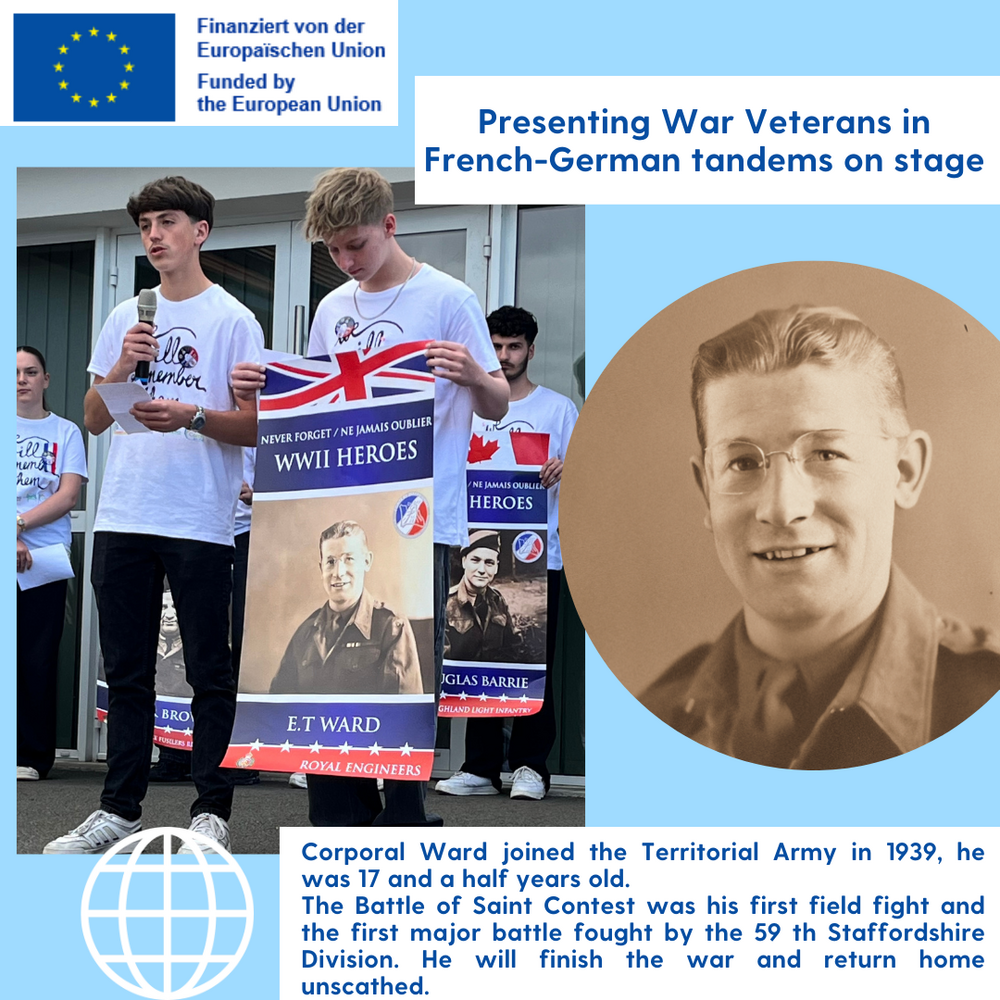
An honorable task for the Peace Builders
-
Each student recorded a video and narrated a text to share the stories of the war veterans they will present on stage during the D-Day anniversary celebrations in Saint-Contest.
-
Who were these veterans? What do we know about them? What did they experience?
-
Listen closely to learn more about these individuals who fought for peace in Europe.
-
⬇️⬇️⬇️⬇️⬇️⬇️⬇️⬇️⬇️⬇️⬇️⬇️⬇️⬇️
standupforpeace not only in Germany but also in Ste Contest, Normandy
-
-
Transmitting our message for peace to the crowd in Ste Contest by asking them to "stand for peace".
-
This admittedly spontaneous action was born from a feeling — the Erasmus feeling.
-
Our shared days in Caen and the strong sense of community that developed among us sparked an inner drive to spread our message: the importance of peace for Europe.
-
By the end of the week, our theme “Peace and Culture” had taken on a deeper meaning. Through ongoing intercultural exchanges, we explored how peace feels to each of us — shaped by our national identities — and how we celebrate it in our own ways. In Caen, we found out that the emotions were very different due tue national history. These conversations strengthened our understanding and connection so much that we felt compelled to share it with others.
-
And more than that:
-
We wanted our audience to care just as deeply.
-
We wanted them to feel that standing up for one another — and for a peaceful Europe — is something that matters.
"Peace and Justice" in Lohne 03/257
Getting to know each other
-
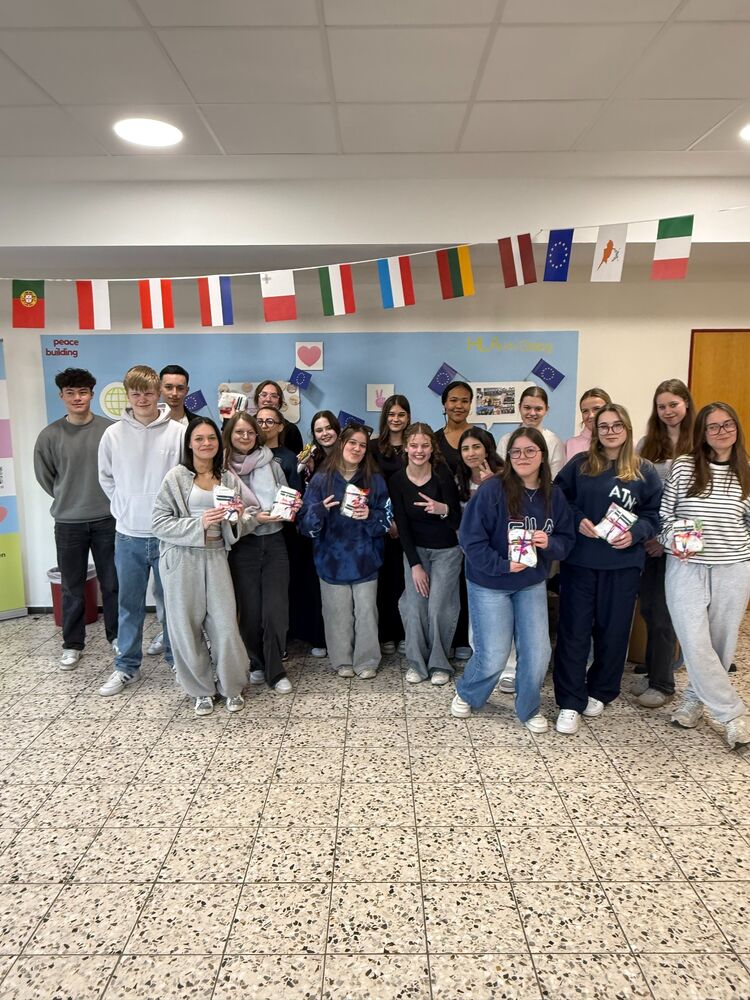
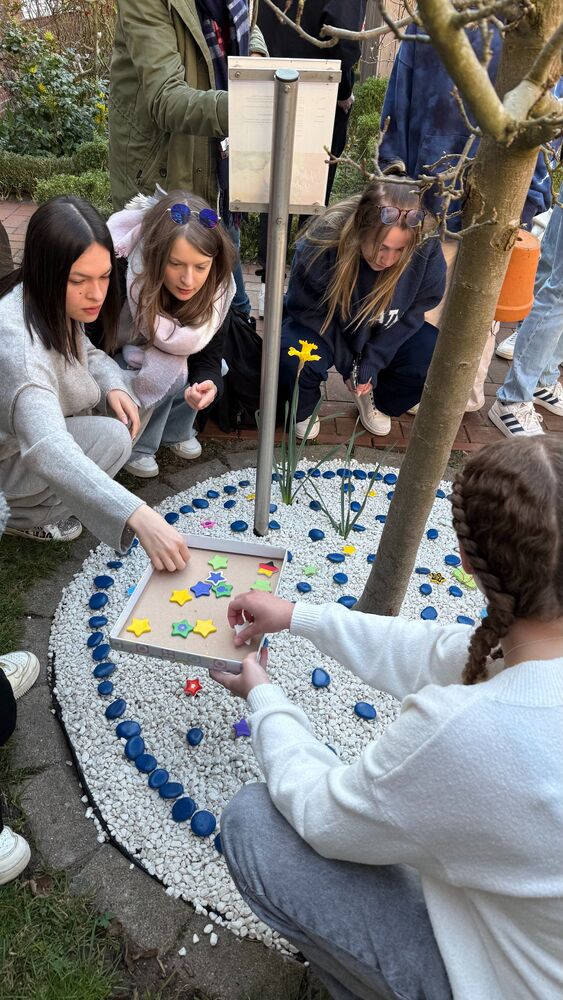
As we began this exciting week of connection and cultural exchange, the first activity was all about creativity, cooperation, and shared values. To mark our time together, we created a lasting symbol of peace and unity in our school garden — using painted stones.
-
This project is called “Creative Activity – Peace & EU Values.”
-
We’ve already prepared many blue stones, forming the background of the European symbol. The European students added the stars — and more importantly, the values that unite us across borders.
-
In tandems, they received one core EU value and two stones. On the first stone, they wrote the value in bold letters. On the second, they draw a symbol that represents it. They also designed a star — yellow or colorful — to complete the image.
-
Once finished, we let the stones dry and later arrange them into a meaningful symbol of peace and cooperation.
-
This is more than an art project — it’s a celebration of what brings us together. Let’s make it beautiful, thoughtful, and full of heart.
-
Creative Project with PolitArt
-
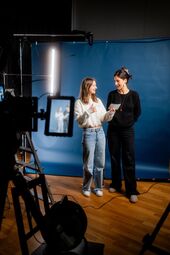
With the support of PolitArt Lohne, our young Europeans have taken on a new challenge to spread their message about peace and justice.
-
Thanks to a professional film set and the guidance of experienced coaches, the students became the main actors in their own short films — projects that truly matter to them.
-
Why did we choose this creative approach?
-
Because even just discussing the values we want to stand for as Europeans created a sense of connection among the students. Everyone involved felt it was important to take a stand — especially in times marked by disinformation, rising extremism, exclusion, and even war in Europe.
-
-
Short, impactful videos that are easily shared on social media are a powerful and student-oriented way to reach others today. Through their personal social media accounts, the students take a clear stance, are very motivated, identify with their message, and carry it out into the world.
-
The following four videos showcase what they have created together and what they want to say to Europe to make it a better place for everyone.
-
⬇️⬇️⬇️⬇️⬇️⬇️⬇️⬇️⬇️⬇️⬇️⬇️⬇️⬇️
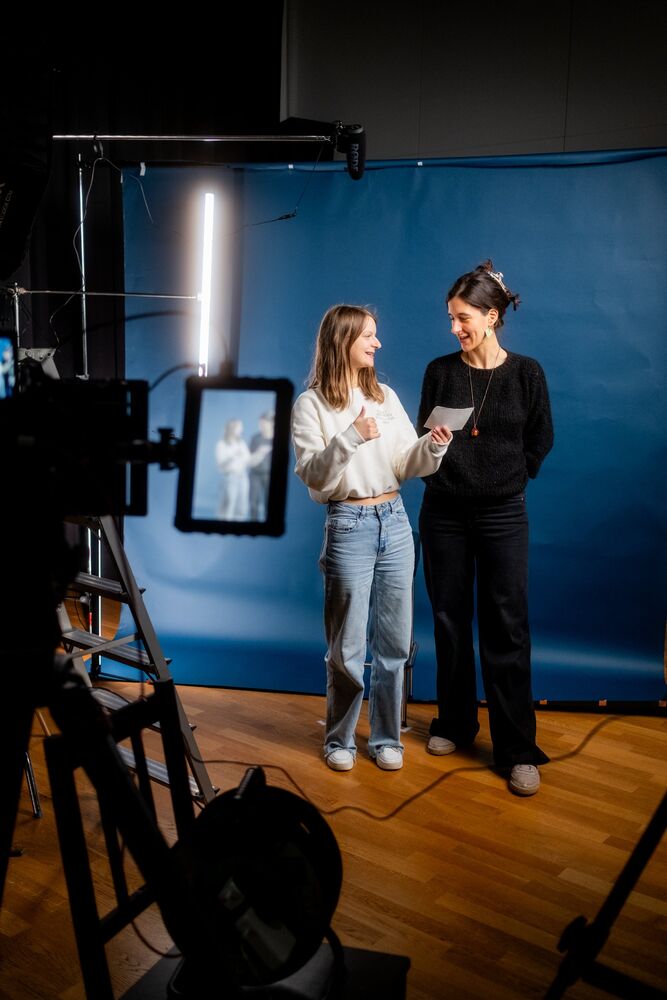
Bullying
-
Bullying has no place in any school!
-
In this video, we unite for a respectful coexistence. No one should feel insecure or marginalized, especially in their school, as it violates both feelings and basic human rights. Let’s foster respect in everyday school life. School needs to be a safe place!
-
Every student deserves to walk into school without fear—free to learn, grow, and express themselves. Bullying, in any form, creates invisible wounds that can last a lifetime. Whether it's verbal, physical, or online, it must be addressed with zero tolerance.
-
We all have a role to play: students, teachers, and parents alike. By standing together, speaking up, and showing empathy, we can build a culture where kindness is the norm and diversity is celebrated. Respect isn’t just a rule—it’s a value we live by.
-
Let’s raise our voices for those who feel unheard. Let’s create classrooms where everyone belongs. Because when we choose respect, we choose a better future for all.
-
Together, we can make school a truly safe space—for everyone.
Equality
-
Peace is more than a dream — it’s a daily decision we make.
-
It’s in how we treat others, stand up for what’s right, and create space for every voice to be heard. Building peace doesn’t require grand gestures — just open hearts, open minds, and the will to make a difference. One act of kindness. One conversation. One step at a time.
-
Peace begins in the small moments — when we choose to listen instead of judge, to help instead of ignore, to forgive instead of hold on to anger. It’s in the courage to speak up against injustice, and in the humility to admit when we’re wrong.
-
Every day offers a new chance to build bridges instead of walls. Whether in our schools, communities, or online spaces, we can be the reason someone feels seen, safe, and valued.
-
Let’s remember: peace isn’t passive. It’s active. It’s intentional. And it starts with us.
-
Together, through empathy and action, we can shape a world where peace is not just a hope — but a reality.
Love & Peace
-
Exploring Peace Through Equality
-
Our Peace Building Project dives deep into the essence of peace. While answers vary, one theme stands out: equality. But what does equality mean to us? It means everyone has the same rights and opportunities, regardless of skin color, origin, social status, and more. Peace is the key to a brighter future. Together, let’s build a beautiful world.
-
But equality isn’t just a concept — it’s a commitment. It means recognizing the value in every person and ensuring that no one is left behind. It’s about breaking down barriers, challenging stereotypes, and creating systems that uplift rather than divide.
-
True peace cannot exist without justice. And justice begins when we listen to each other’s stories, honor each other’s experiences, and stand up against discrimination in all its forms. When we embrace diversity, we don’t just tolerate differences — we celebrate them.
-
In our classrooms, communities, and conversations, we have the power to shape a more inclusive world.
-
Let’s teach empathy, model fairness, and lead with compassion. Because when equality thrives, peace follows.
-
Together, let’s be the generation that turns understanding into action — and dreams of peace into reality.
Discrimination
-
Shining a Light on Everyday Discrimination
-
Our video highlights the different kinds of discrimination marginalized people face daily through short, impactful sentences. Two voices expose discriminatory remarks, while a third provides context and empathy. Let’s choose our words wisely and embrace tolerance.
-
Discrimination doesn’t always shout — sometimes, it whispers through microaggressions, stereotypes, or silence. It can be found in classrooms, workplaces, public spaces, and even in casual conversations. These moments may seem small, but their impact is lasting.
-
By using real-life examples and authentic voices, our video aims to raise awareness and spark reflection. The third voice offers not just explanation, but also a call to action: to listen, to learn, and to unlearn harmful biases.
-
We believe that change begins with awareness. When we recognize the subtle forms of exclusion, we can begin to dismantle them. It’s not about blame — it’s about growth. It’s about creating a world where everyone feels seen, heard, and respected.
-
Let’s be mindful. Let’s be kind. Let’s be the reason someone feels safe, not silenced.
-
Together, we can turn everyday moments into opportunities for inclusion and understanding.
Why would an Erasmus+ project create a stone bed?
-
-
At first glance, it might not be obvious. But if you look more closely, you’ll see that all students of the German partner school — and every visitor to the school garden — can now discover the core values of the European Union.
-
Connected to the earlier icebreaker activity, this creative project gave the young Europeans a chance to explore, discuss, and symbolize these values. Each value was expressed through words and images on stones — and given a permanent place in the garden.
-
Together, and as a meaningful conclusion to a successful week, the students laid the stones in the bed. It was a moment that became emotional for many. Because now it’s clear:
-
We are all connected — in solidarity, in democracy, and in a system that values human rights and justice.
"Peace and Justice" in Caen 10/255
Creative Peace Building
-
-
-
-
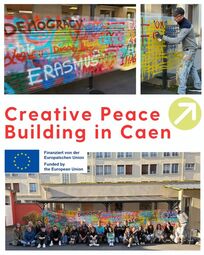
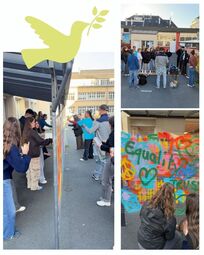
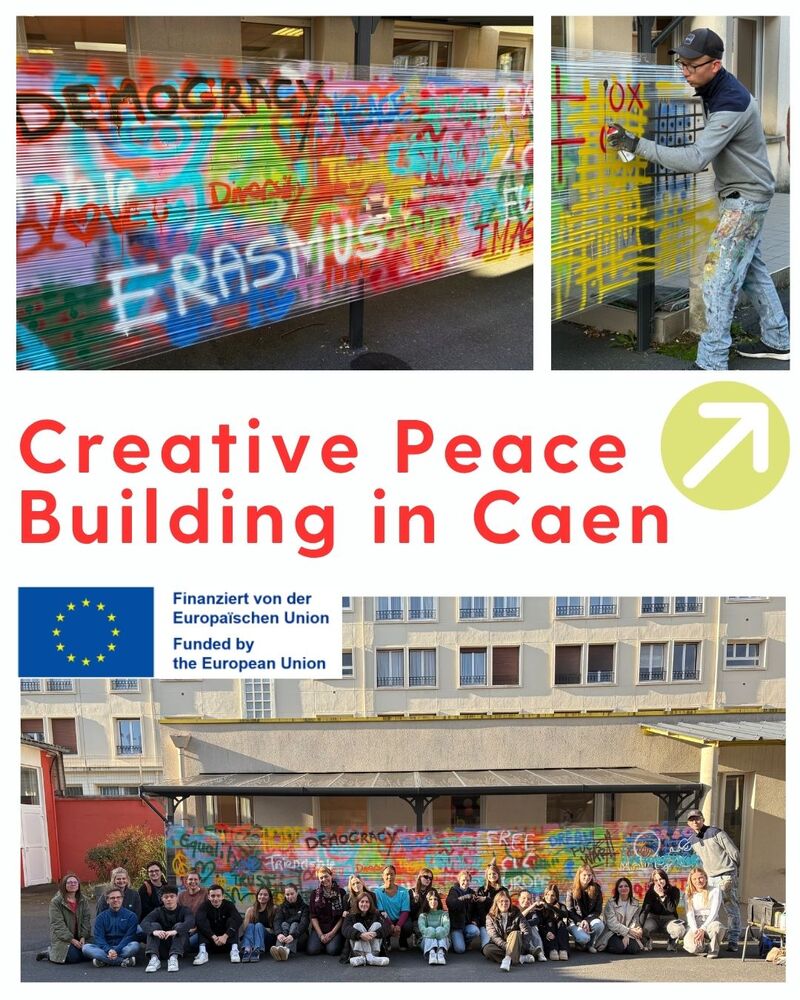
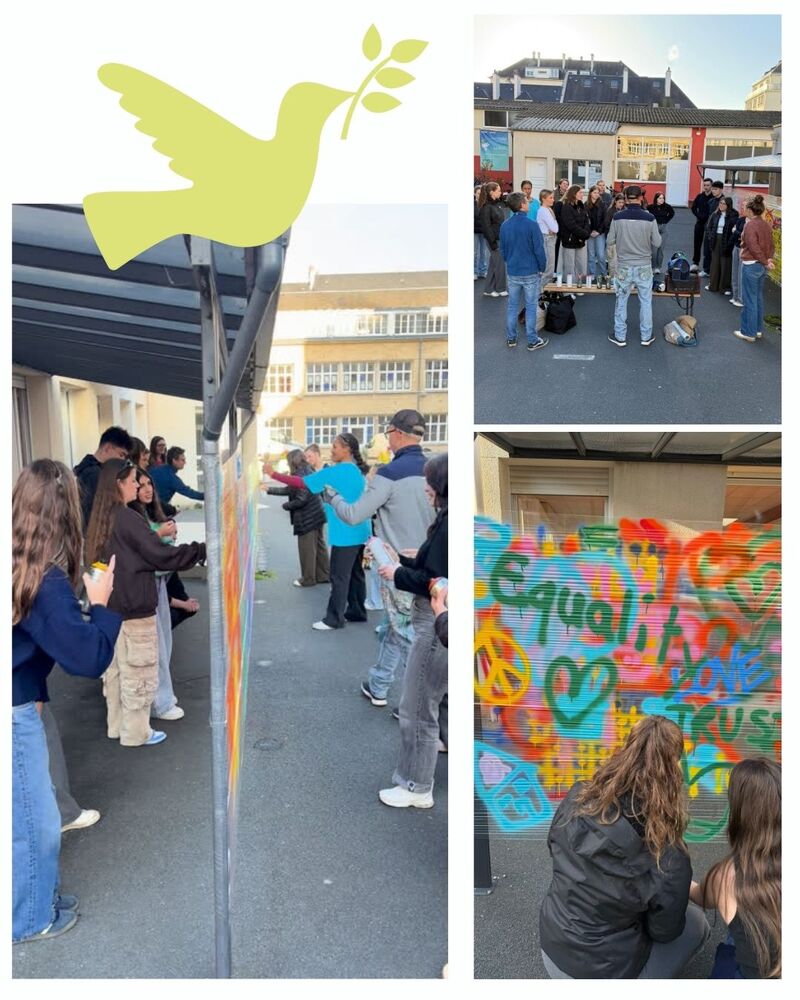
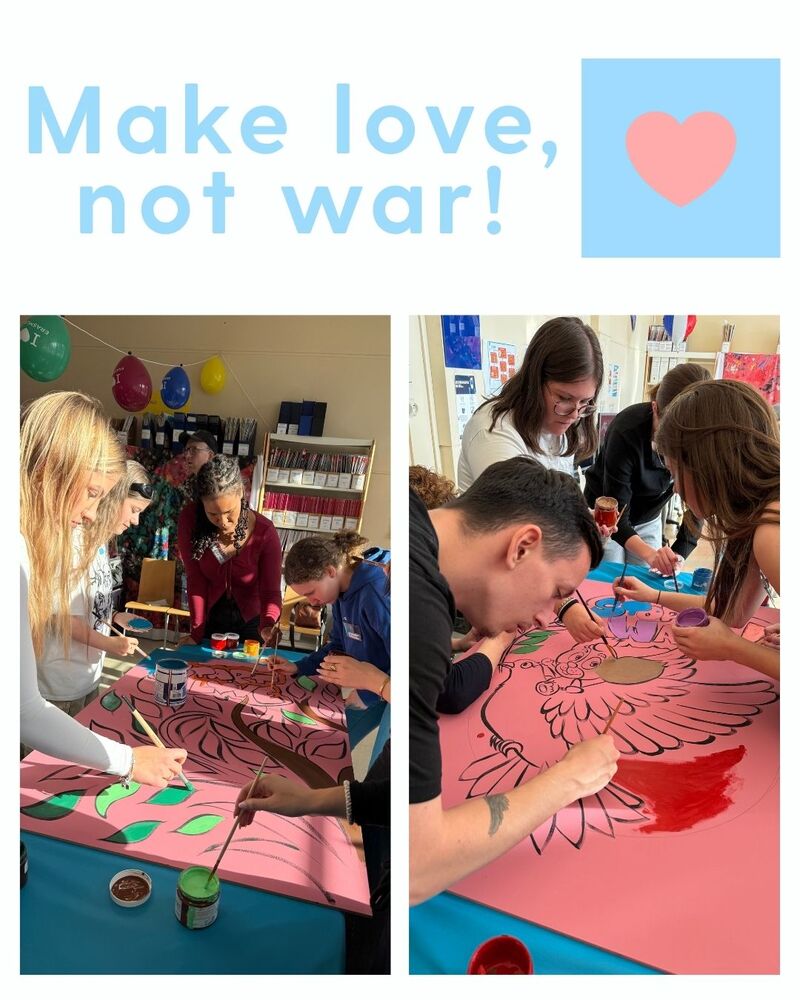
As part of our Erasmus project, German and French students began their exchange in Caen with a creative workshop led by artist Mookimax. The group explored graffiti as a peaceful form of expression and collaborated on an intercultural artwork in the schoolyard, symbolizing openness, diversity and unity. This artistic activity was more than a creative exercise—it served as preparation for the following days, which centered on justice and human rights. Terms such as democracy, equality, and diversity were particularly important here as can be seen in the picutre above.
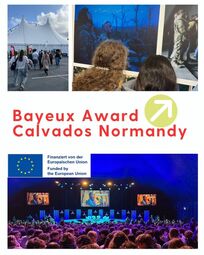
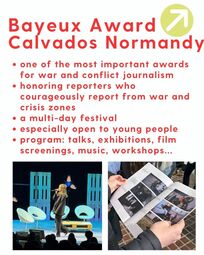
Bayeux Award Calvados Normandy - A Price for War and Conflict Journalism
-
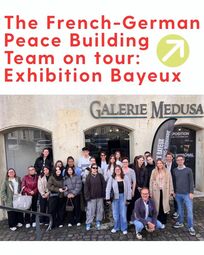
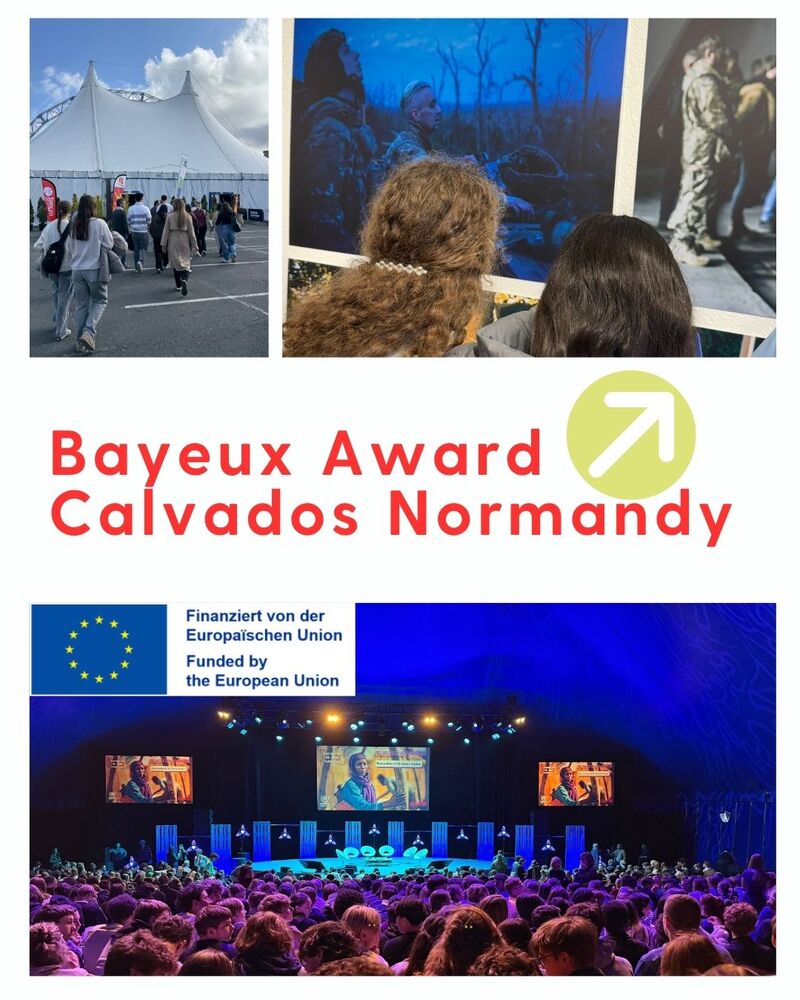
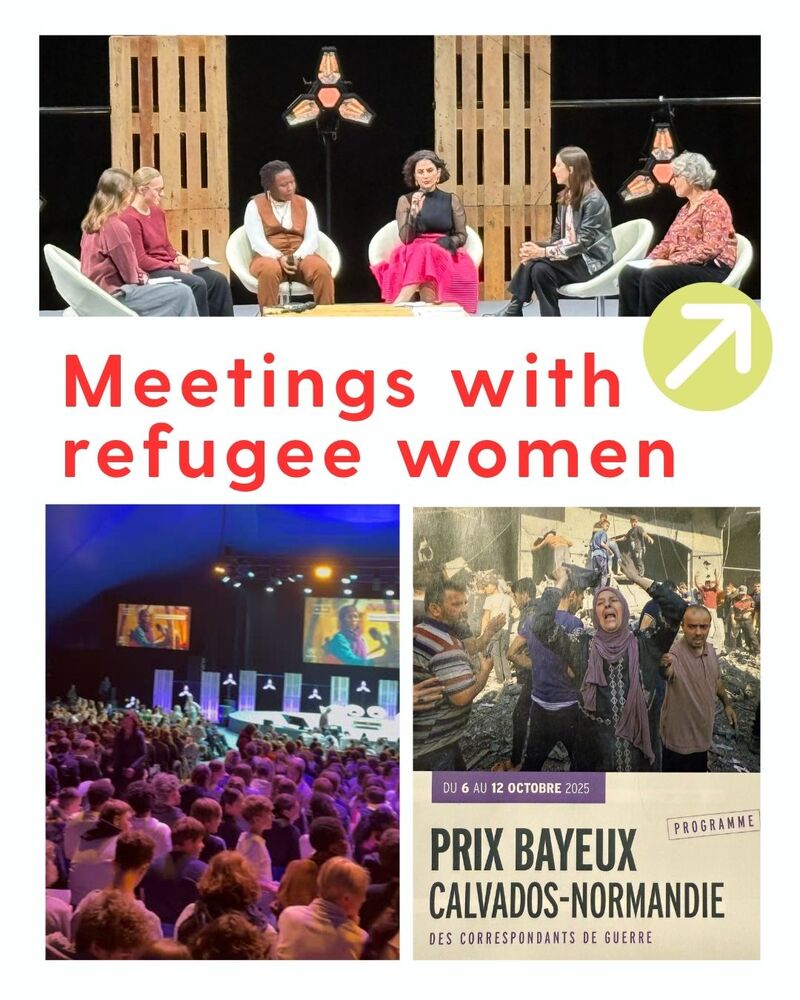
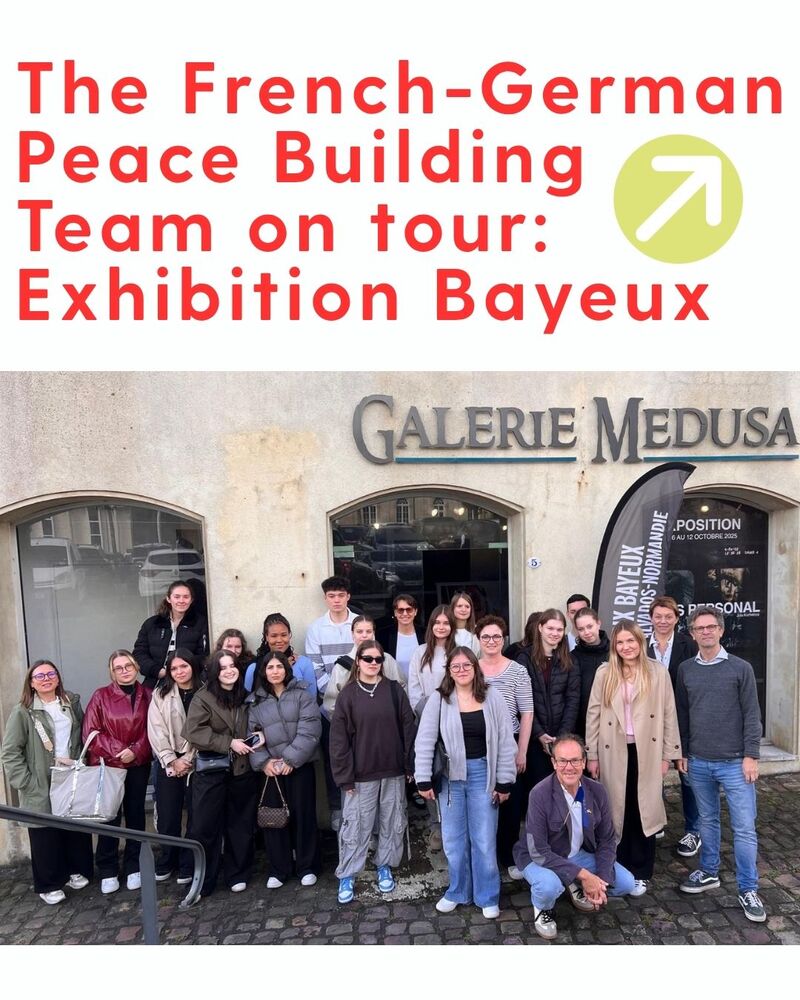
What happens when an entire city devotes a week to journalism—celebrating courage, truth, and the people behind the headlines? Our Peace Building team had the privilege of joining the Prix Bayeux Calvados-Normandie, one of the world’s most renowned awards for war and conflict reporting.
-
-
-
-
-
-
-
-
-
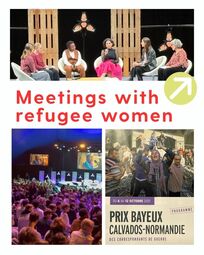
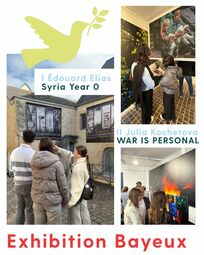
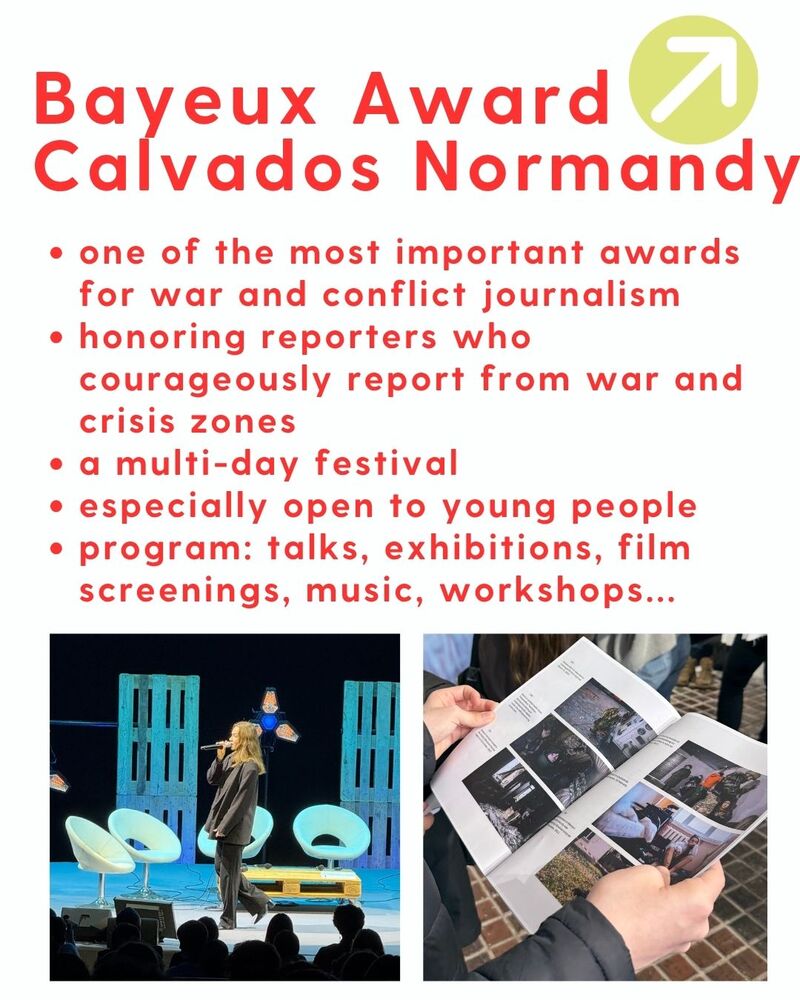
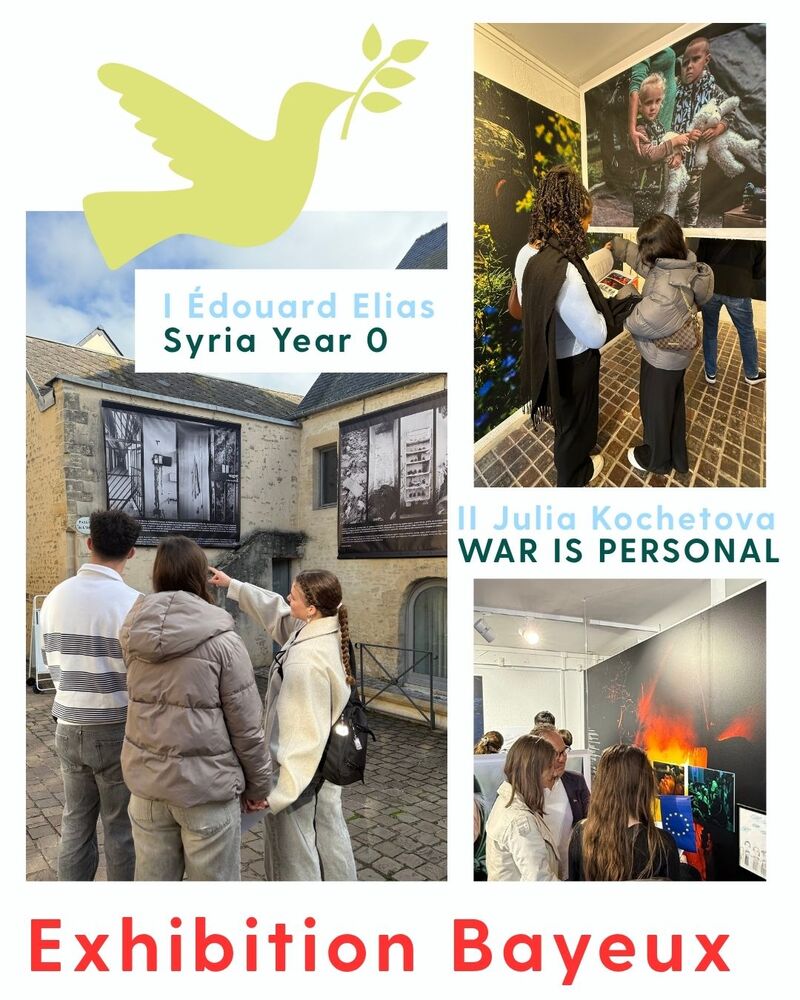
Students participated in the audience vote for the most impactful war report, explored powerful exhibitions such as Édouard Elias’ “Syria, Year 0” and Julia Kochetowa’s “War is Personal”, and attended an inspiring UNHCR meeting with Mursal Sayas and Sylla Assa Badiallo, who shared their experiences of displacement and their fight for human rights.
The day concluded with an emotional performance by Ukrainian singer Elizabeth Kostiakina—a moving reminder of the human stories behind global conflicts.
A Memorable Finale - two Years of Peace Building
-
Two Years of Peace Building – A Memorable Finale
-
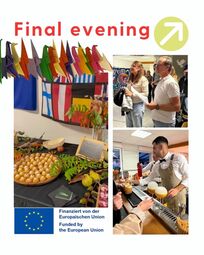
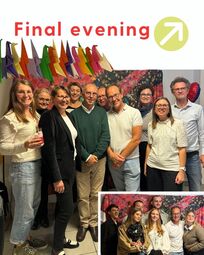
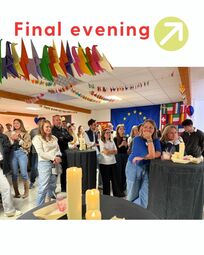
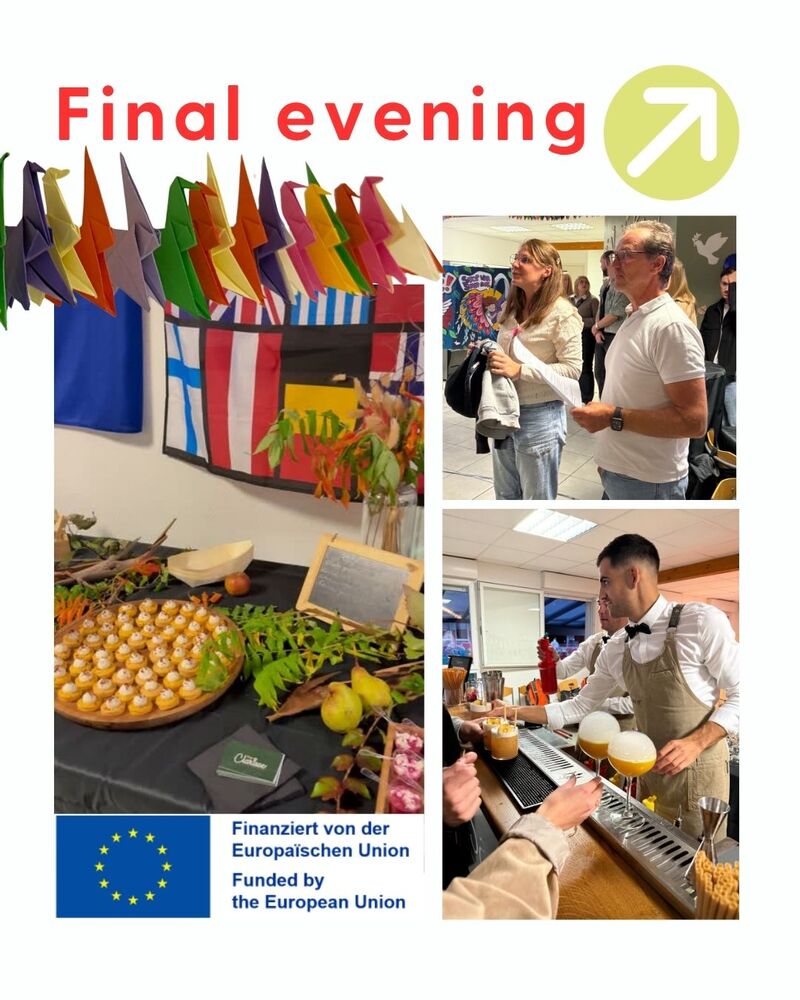
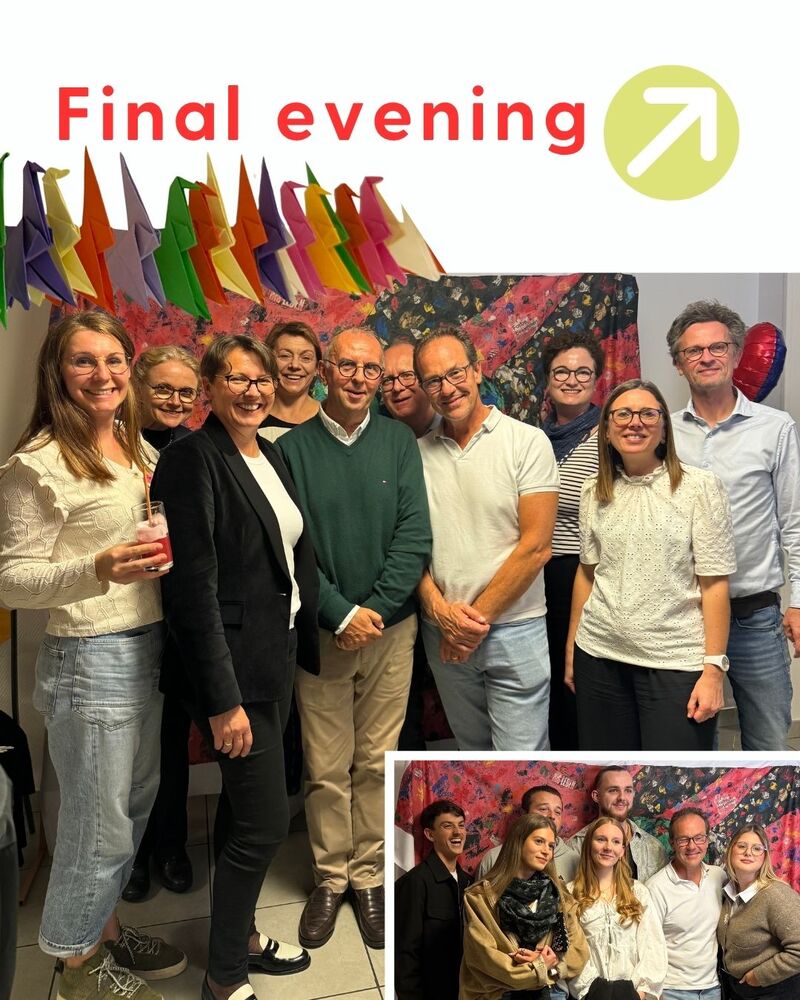
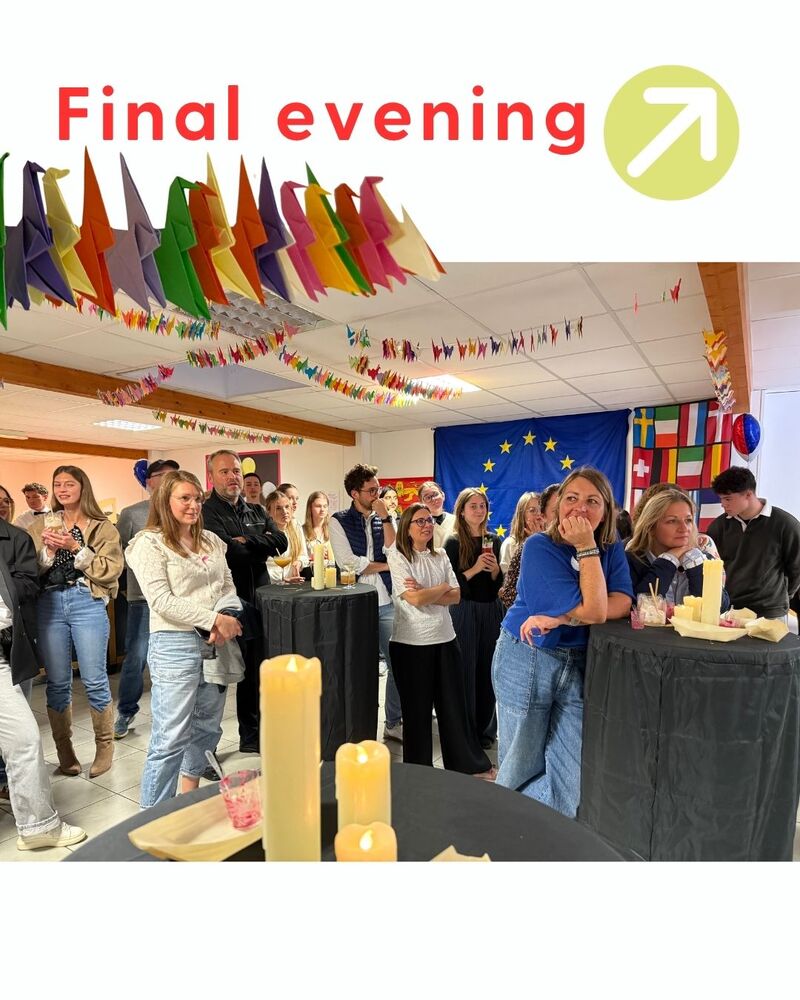
After two years of collaboration, our Erasmus Peace Building project concluded with an unforgettable evening, thoughtfully prepared by our French hosts. The celebration featured an emotional photo presentation, a delicious buffet, and even professional cocktail makers—a warm and creative way to close this inspiring journey.
-
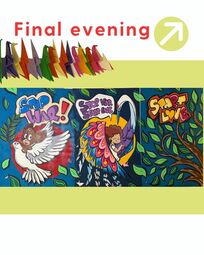
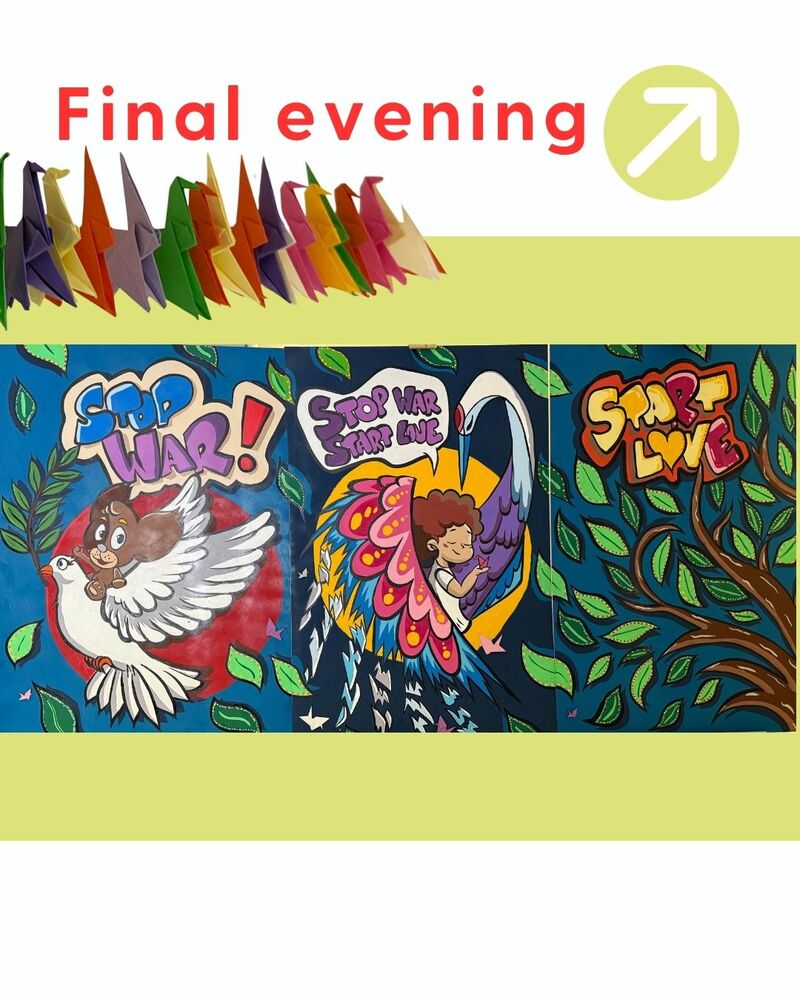
The highlight of the evening was a symbolic gift: the central piece of a triptych bearing the message “Stop war, start love.” This artwork will hold a special place in our school as a lasting reminder of the project’s values—peace, dialogue, and solidarity.
-
This finale marked not just the end of a program, but the beginning of continued commitment to building bridges across cultures.
-
-
-
-
Two Schools - One Message
-
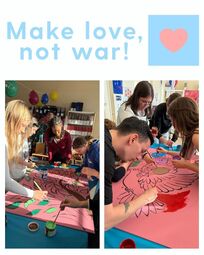
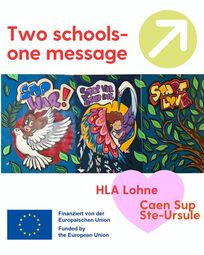
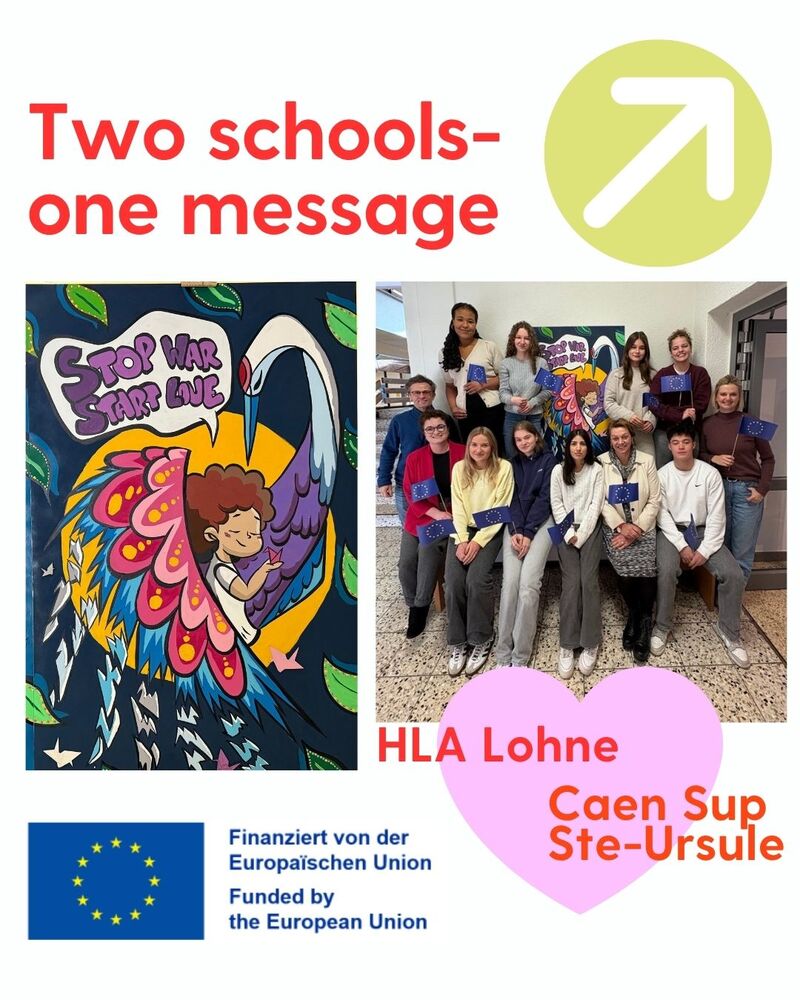
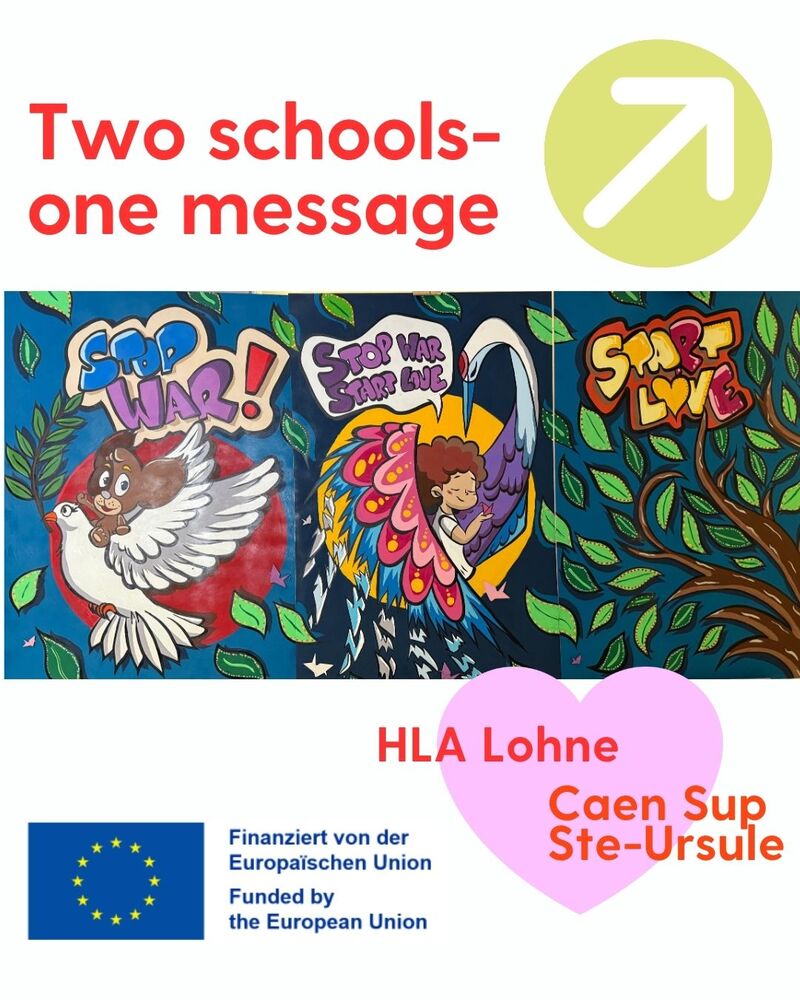
As part of the Peace Building Erasmus+ project, a unique fresco was created — designed by the artist Mookimax and brought to life by French and German students.
-
It originally consists of three paintings, all carrying the same message: 👉 Live love, not war! 💖✌️
-
One of these three artworks was gifted to Handelslehranstalten Lohne by our partner school. It has now found a meaningful place in our building and symbolizes the bond between both schools, who will continue to collaborate in the future.
-
A heartfelt thank you to our partner school CaenSup Sainte-Ursule.
-
-
Reflections from Bayeux: Peace, Justice, and the Power of Journalism
-
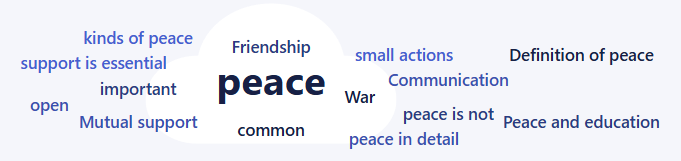
Our experience at the Prix Bayeux Calvados-Normandie made one truth unmistakably clear: the right to live in peace is far from equally guaranteed across the world. Justice is inseparable from human rights, and every person deserves a life in safety, dignity, and mutual respect. These reflections became especially evident during our time in Bayeux, reminding us that peace is not automatic—it requires courage, responsibility, and global solidarity.
Equally important is the role of journalism in this process. In an era dominated by international conflicts and wars, fake news and populism, conflict reporters provide objective, fact-based insights that shed light on realities often hidden from public view. Their work is a vital contribution to justice, as it informs societies, counters misinformation, and gives a voice to those affected by war and displacement. The Prix Bayeux highlighted how truth-telling is not only a profession but a cornerstone of peace and human rights.
Evaluation
Teacher's Annotations7
The idea
-
The Peace Project was deliberately designed so that learning would not be reduced to the mere transmission of knowledge, but understood as a process of encounter, reflection, and dialogue. The aim was to provide students with spaces in which they could perceive different perspectives, tolerate them, and bring them into conversation with one another.
Why did we design the project this way?
-
In an increasingly diverse society, peace education is a central educational task. We wanted to create a project that connects to the students’ everyday lives and enables them to contribute their own experiences, questions, and viewpoints. Peace education was therefore not treated as an abstract topic, but as something that begins in everyday interactions: in listening, in taking other perspectives seriously, and in respectful exchange.
How did we proceed?
-
The project was built up step by step. First, several video conferences between the French and German student groups were held to foster contact beyond the mobility periods and to work on the topic together. During the mobilities, we placed particular emphasis on helping students connect with each other and overcome possible inhibitions when speaking. After this warm-up phase, a joint thematic introduction followed. On this basis, students were able to work in various formats that allowed for both individual reflection and cooperative group work.
As teachers, we saw ourselves less as transmitters of knowledge and more as facilitators and moderators who provide impulses, pose open questions, and encourage reflection. It was important to us to allow sufficient time for conversations and feedback. In some cases, external support was brought in to help create the planned practical outcomes. Artists from the fields of video, graffiti, and performance contributed to this process.
What promotes intercultural learning?
-
The diversity of the participating students created numerous intercultural encounters. Different experiences, cultural backgrounds, and perspectives became visible and could be addressed. The project fostered the ability to see differences not as obstacles but as enrichment. Intercultural learning did not take place theoretically, but through working and exchanging ideas together.
What promotes perspective-taking for peace education?
-
A central component of the project was the intentional shift of perspective. Students were encouraged to imagine other life situations, question their own assumptions, and allow new viewpoints. This perspective-taking strengthens empathy and is an essential foundation for peace education, as it helps to view conflicts in a more nuanced way and avoid premature judgments.
What fosters dialogue?
-
Dialogue was a key element of the entire project. Through conversations, group work, and reflection phases, students learned to articulate their ideas, listen to others, and handle differences of opinion respectfully. This created a learning environment in which understanding and mutual respect were at the center.
Conslusion
-
The Peace Project demonstrated that peace education is particularly effective when it is participatory, dialogical, and connected to students’ lived experiences. Students not only expanded their subject-specific knowledge but also developed social and intercultural competencies that extend far beyond the classroom.
Where Peace Building was on stage5
MEP David McAllister
-
-
-
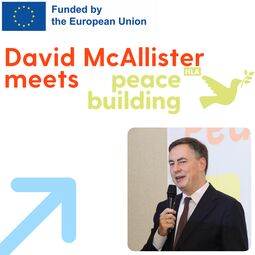
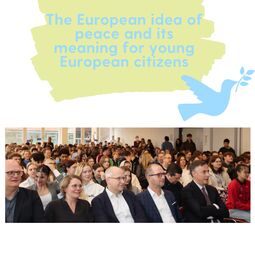
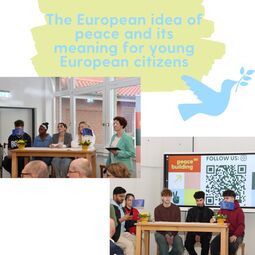
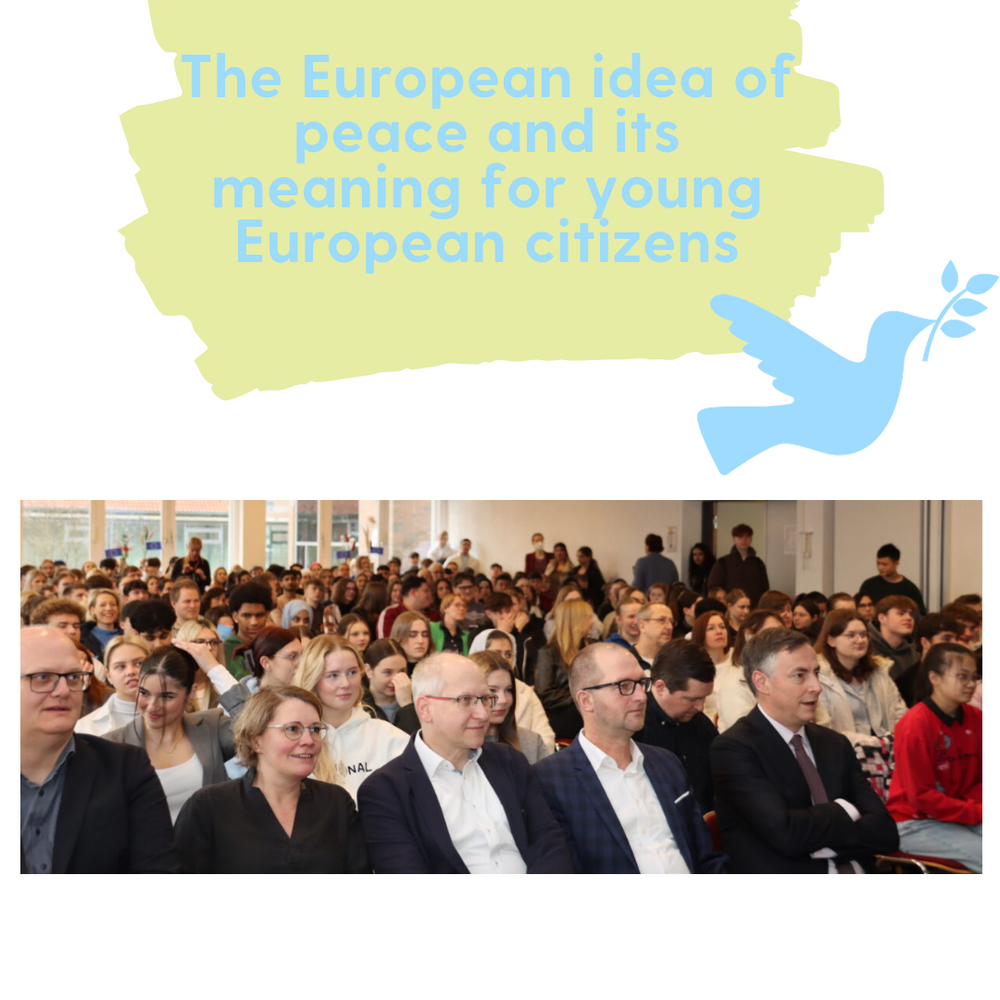
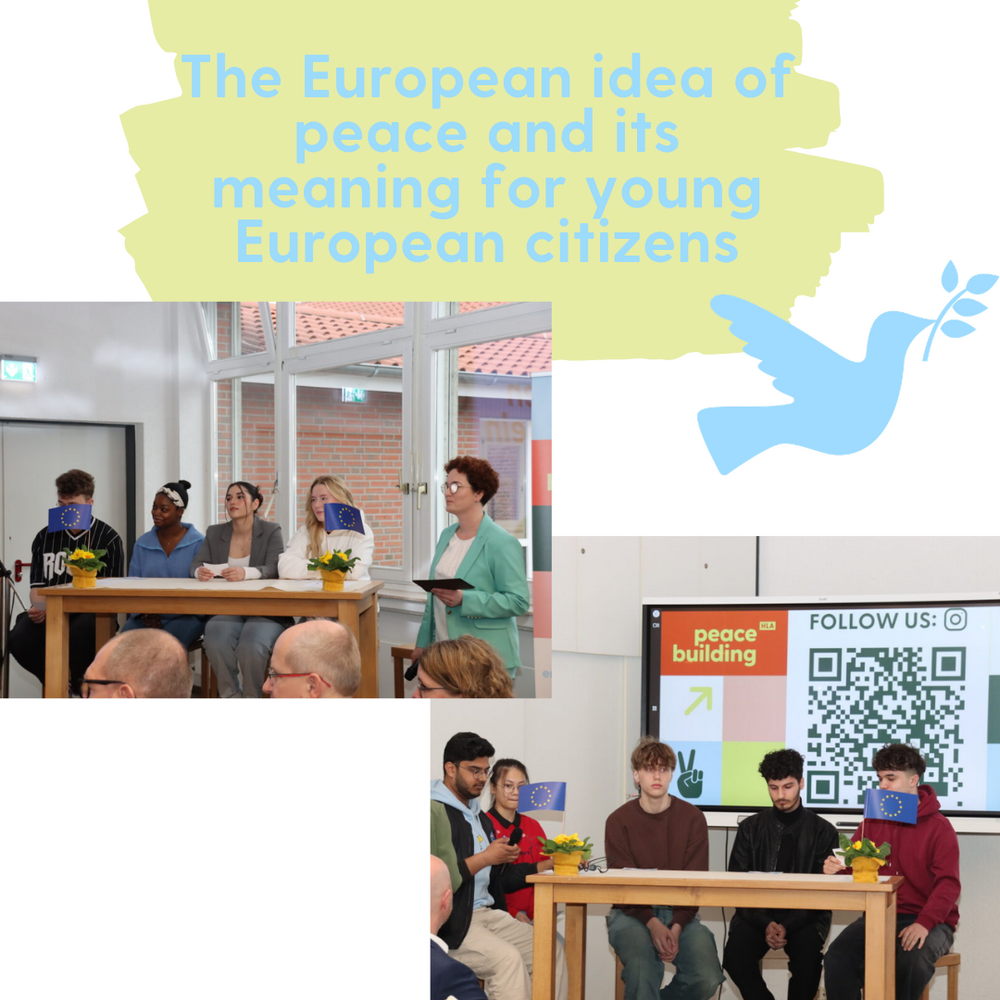
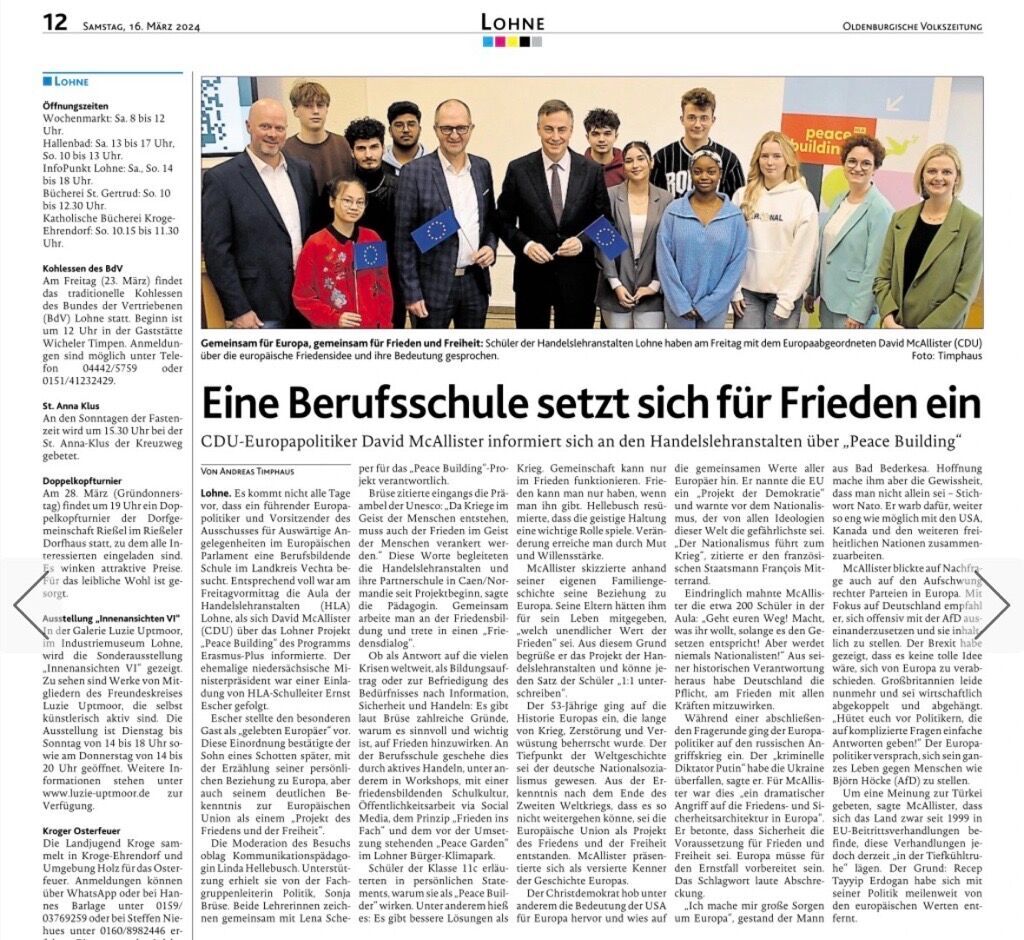
David McAllister, Member of the European Parliament, came to visit us as part of the Peace Building Project. The students gained insight into the core idea and fundamental values of the European Union. The importance of the EU’s commitment to peace for young Europeans became clear, especially against the background of historical responsibility and current political challenges. Statements from students of class 11 impressively rounded off the project presentation.
-
-
-
-
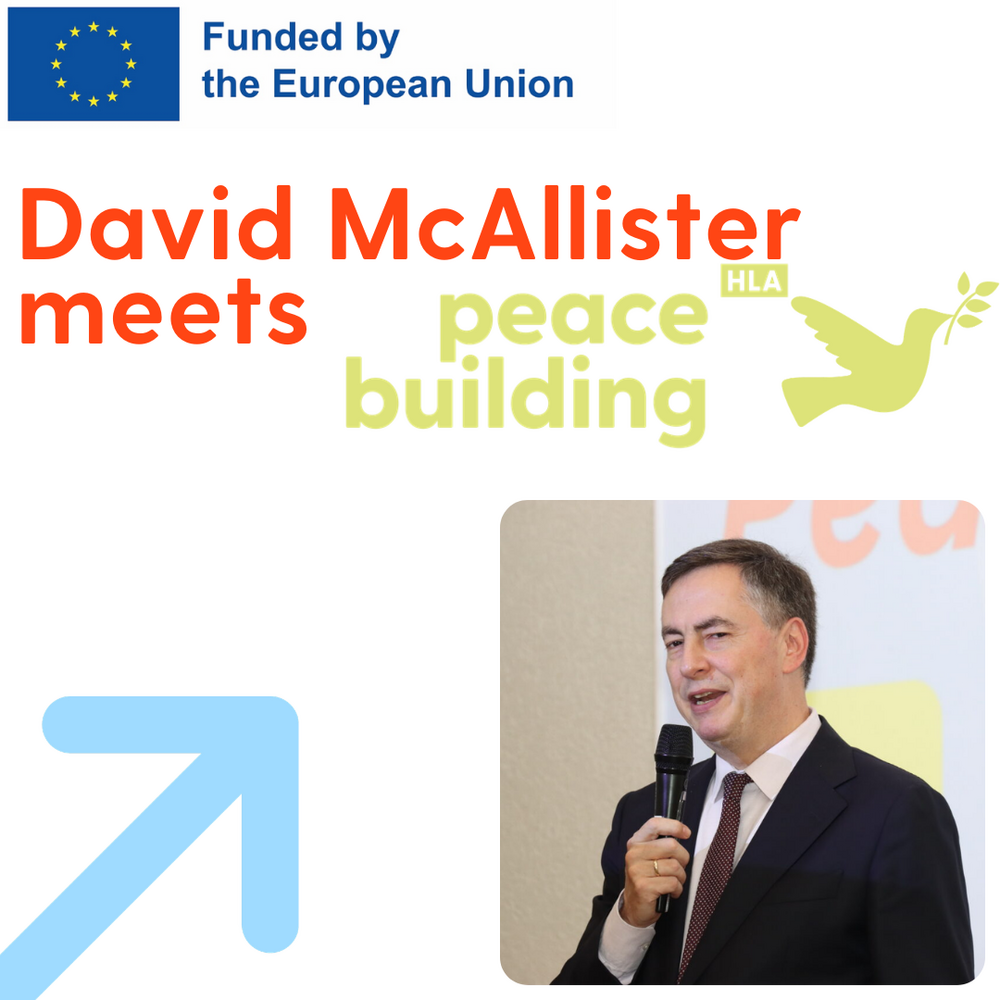
David McAllister called on the students to be grateful for the privilege of living in a democracy and emphasized the significance of the democratic right to vote. The audience was visibly impressed by his speech, which will remain a lasting memory for the students.
Conference "Friedensbildung" in Hannover
-
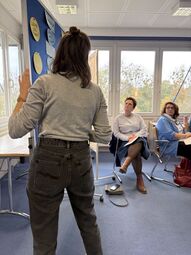
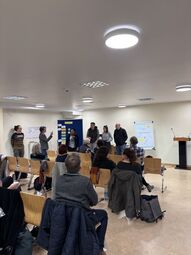
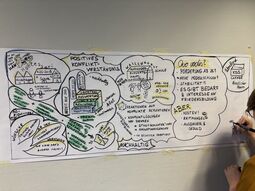
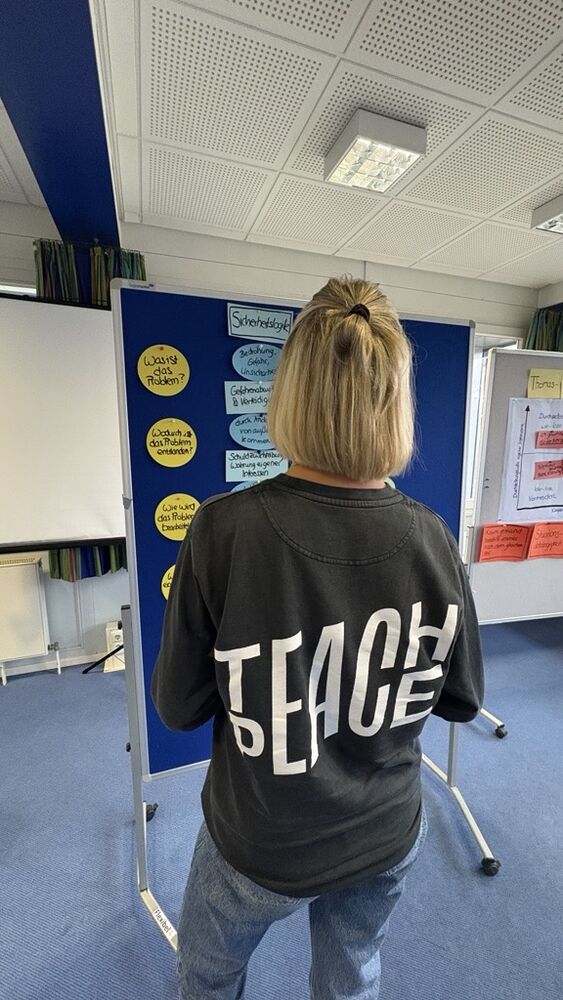
In November 2024, the annual Peace Education Conference “The Classroom as a Lens on Societal Conflicts and Global Crises” took place in Hanover.
The conference addressed the challenge that current global crises and societal conflicts are reflected—indeed particularly—within schools. -
During the conference, various questions were discussed: How can we stand firm in a situation in which the complexity of the challenges leaves no room for simple answers, and in which resilience, courage, and the ability to endure contradictions are required? How can schools and non‑formal education be designed in such a way that the crises and conflicts of (world) society are given the space they need—rather than simply imposing themselves? Furthermore, the conference aimed to demonstrate how concepts from peace education, global learning, and SDGs can help make these questions and topics manageable.
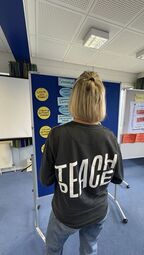
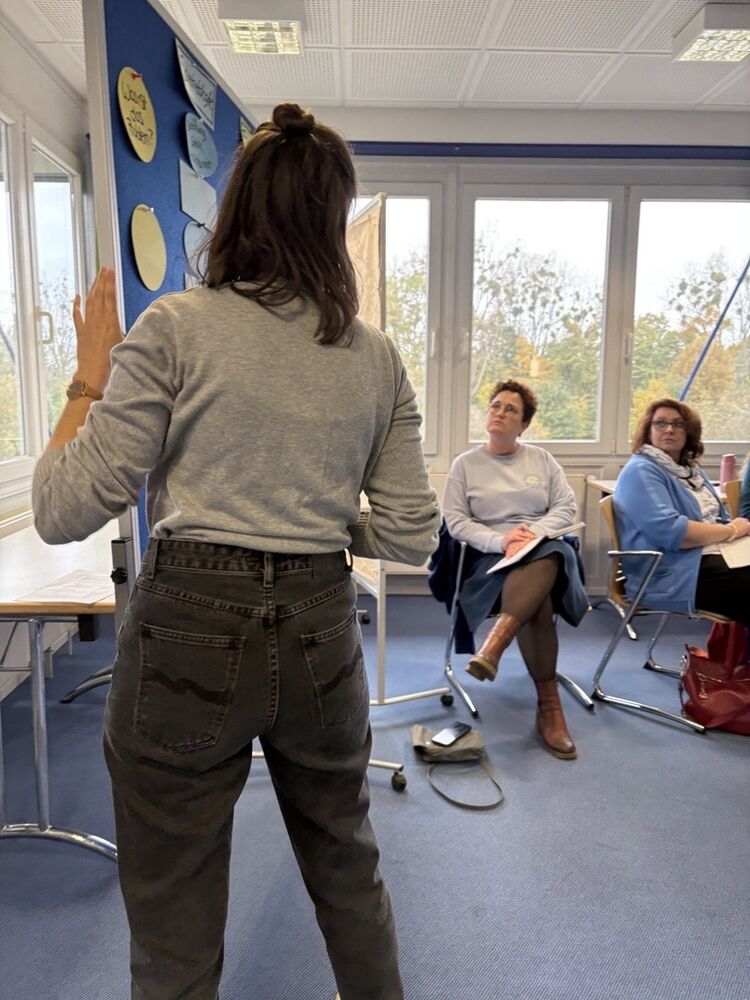
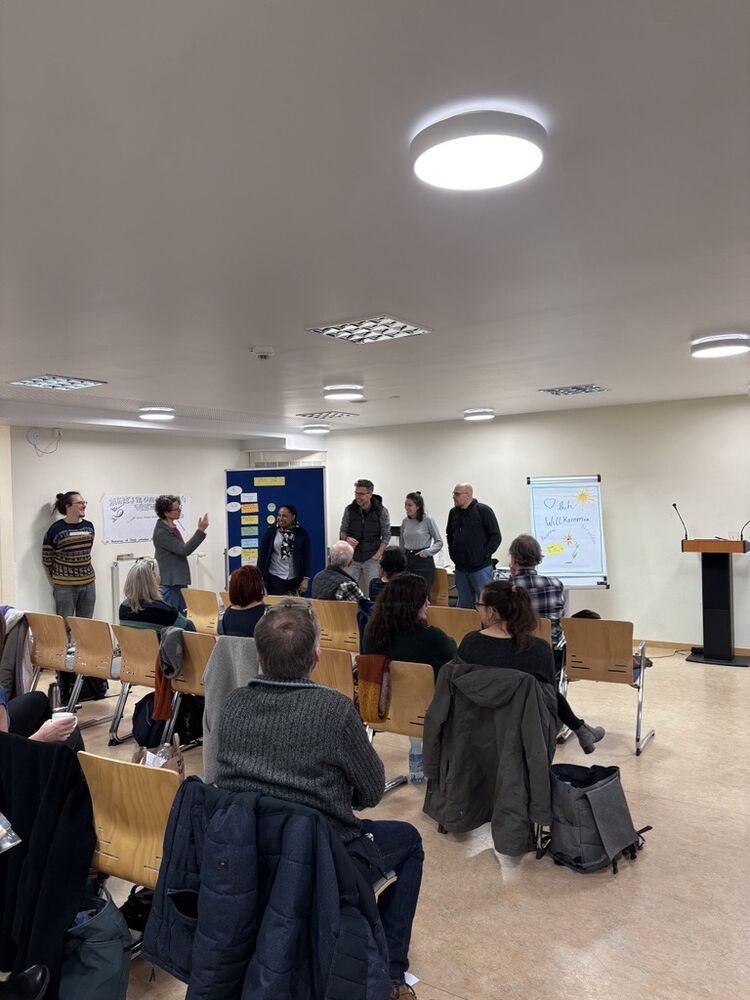
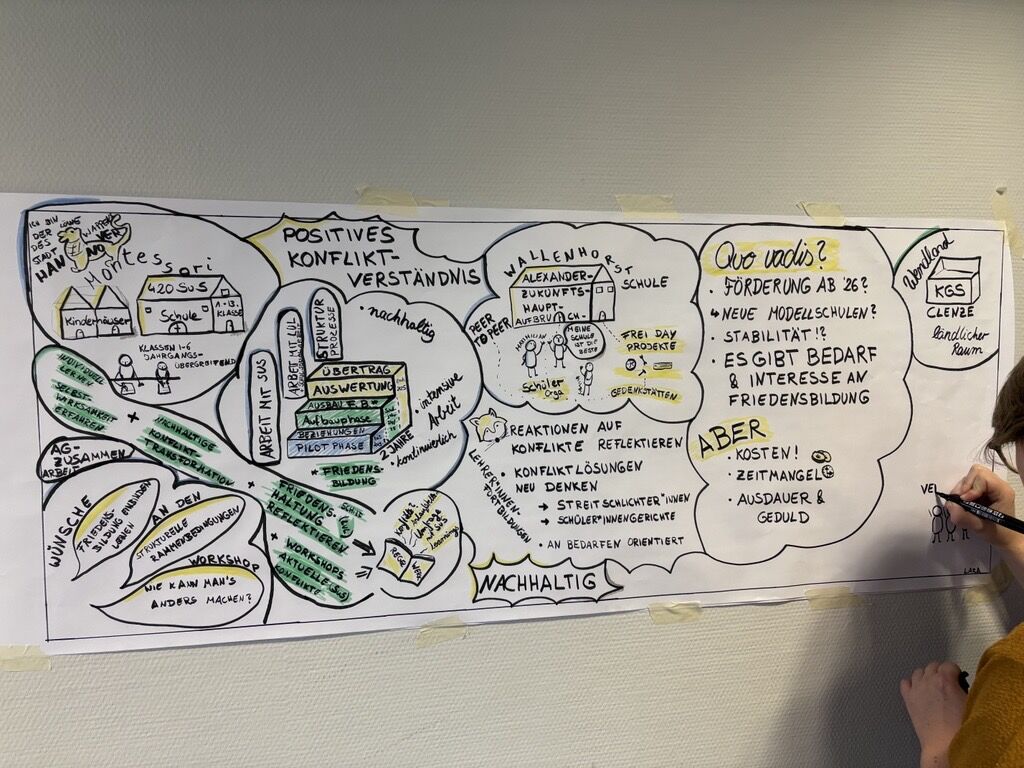
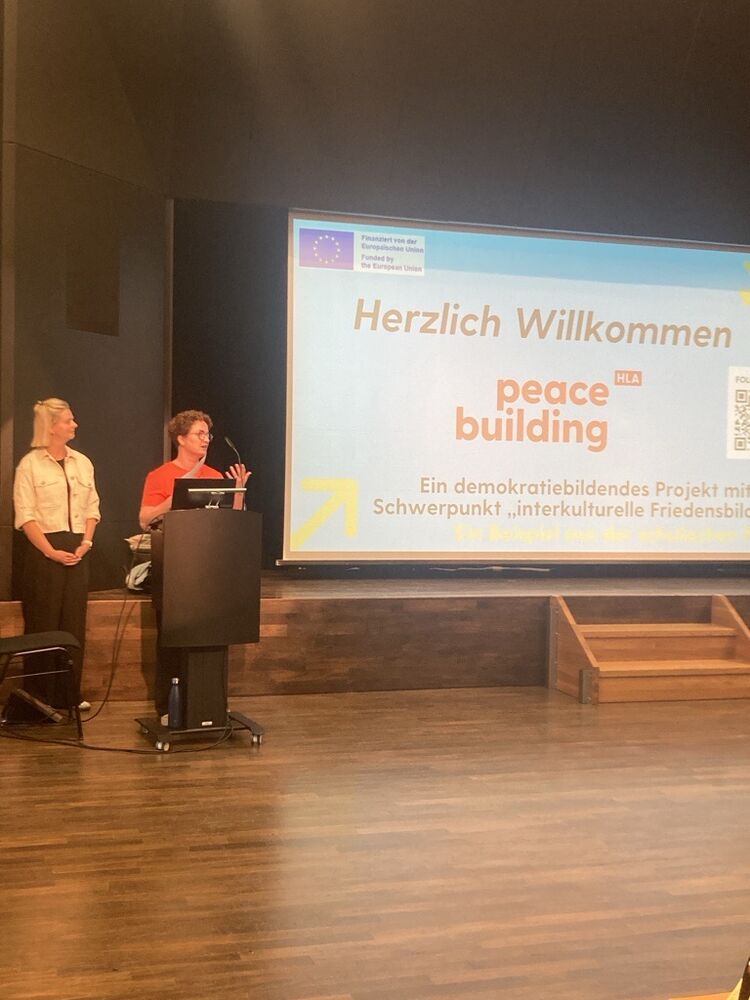
We had the opportunity to present the Peace Building project at the conference and to share our motivation and approaches with various stakeholders from the educational sector in Lower Saxony. -
-
-
-
Yearly Conference National Agency BIBB Ludwigsburg
-
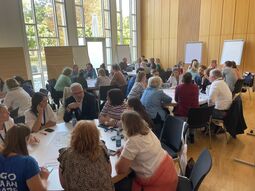
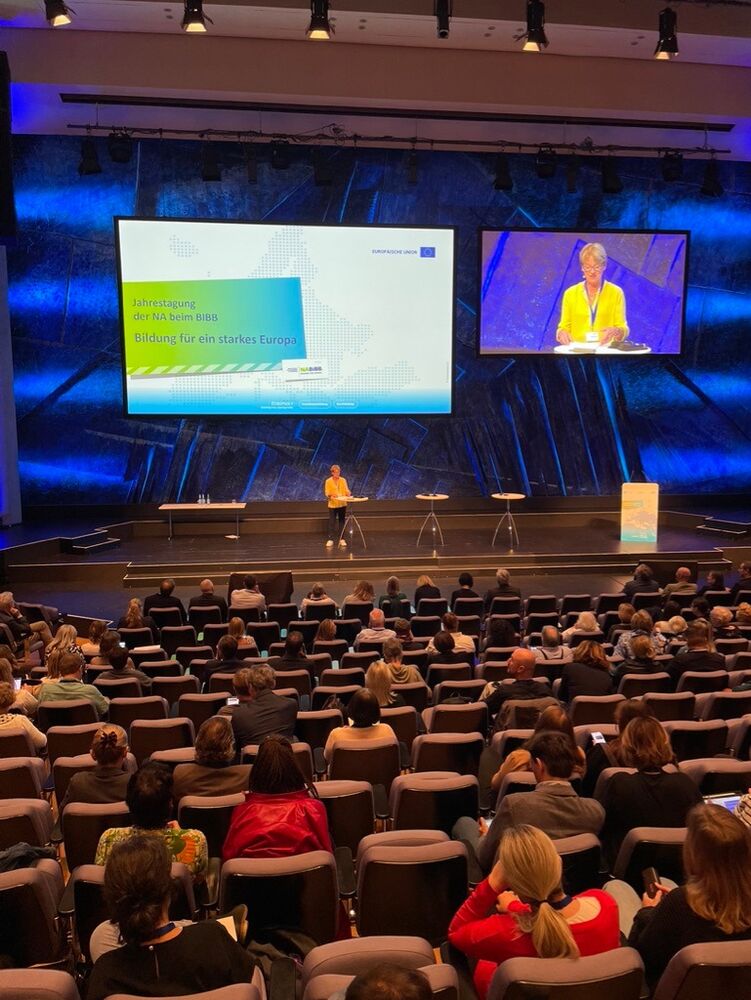
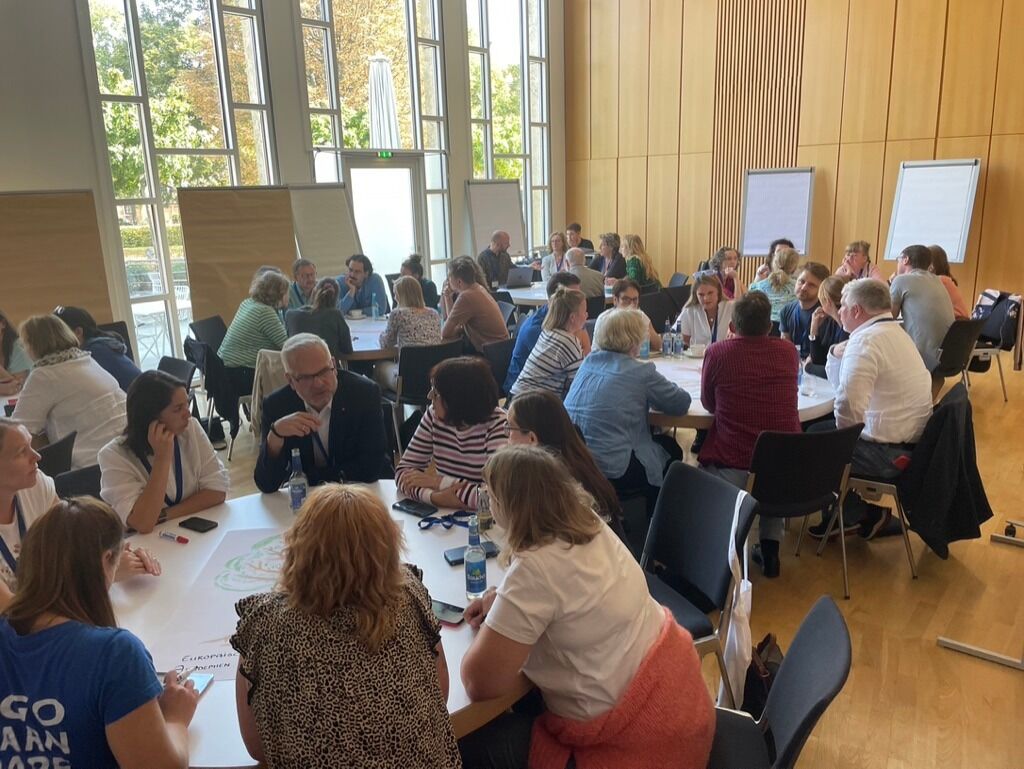
As part of the NA Annual Conference in Ludwigsburg, the National Agency at BIBB offered a workshop on the topic “Democratic Participation and European Values in Project Practice.”
-
The workshop focused on how a project can be designed accordingly and what should be taken into account during its implementation.
-
Peace Building Erasmus+ took part as an interview partner within this workshop.
-
This gave us the opportunity to share our motivation, the experiences we have gathered so far, as well as our approaches and didactic methods. A Q&A session in the style of a World Café was planned. We experienced the participation as an enrichment—both for gaining inspiration for our project and for sharing our Peace Building project with a wider audience.
-
-
Conference DGSS in Münster "Mit Polarisierungen umgehen"
-
Dissemination at the Conference “Dealing with Polarisations” (DGSS), University of Münster
-
As part of our Erasmus+ project, the Peace Building team presented its work at the conference “Dealing with Polarisations” at the University of Münster. The focus was on the question of how schools can create spaces for dialogue, democratic attitudes, and peace‑building processes in times of societal polarization. The contribution attracted great interest and enabled an intensive professional exchange with representatives from academic and educational practice.
-
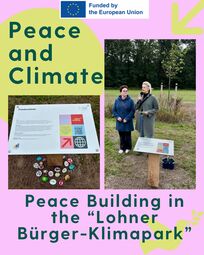
Opening "Bürger-Klimapark Lohne"
-
-
-
🌿 Peace begins with climate care.
-
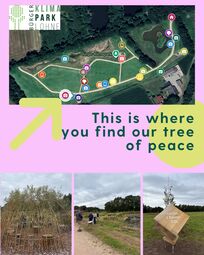
Peace Building had the opportunity to present our school project Peace Building at the opening of the Citizens’ Climate Park of the City of Lohne. Already in the 2023/24 school year, our students developed a concept with the Erasmus+ programm that highlights the connection between climate and peace.
-
A special symbol now stands at our location: the Peace Linden tree. For centuries, it has represented peace and new beginnings — and today it reminds us that climate protection is peacebuilding. Our linden tree invites us to pause and reflect on the following:
-
👉 Peace starts small — and deserves to be imagined on a larger scale.
-
A visit to Lohne’s Citizens’ Climate Park is worthwhile, whether to pause, learn, or be active.
-
We thank the city of LOhne for giving us the opportunity to make our students’ peace building efforts visible.